
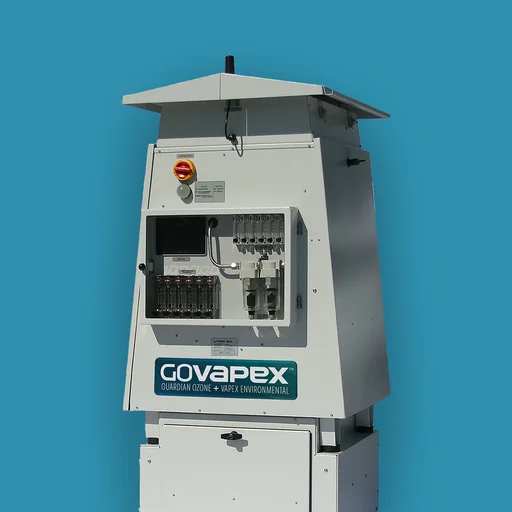
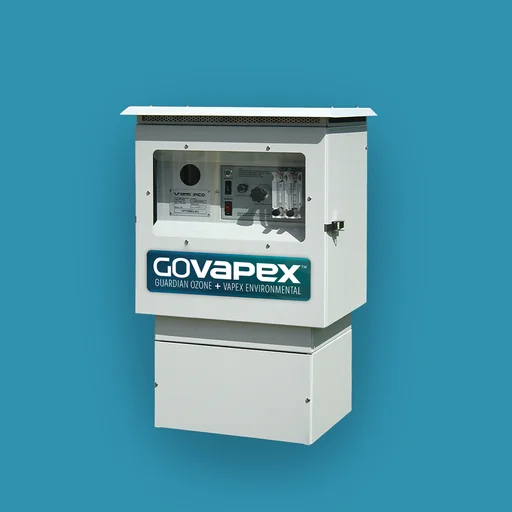
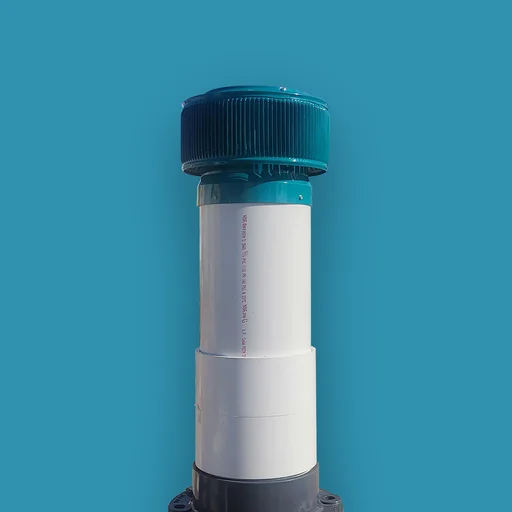
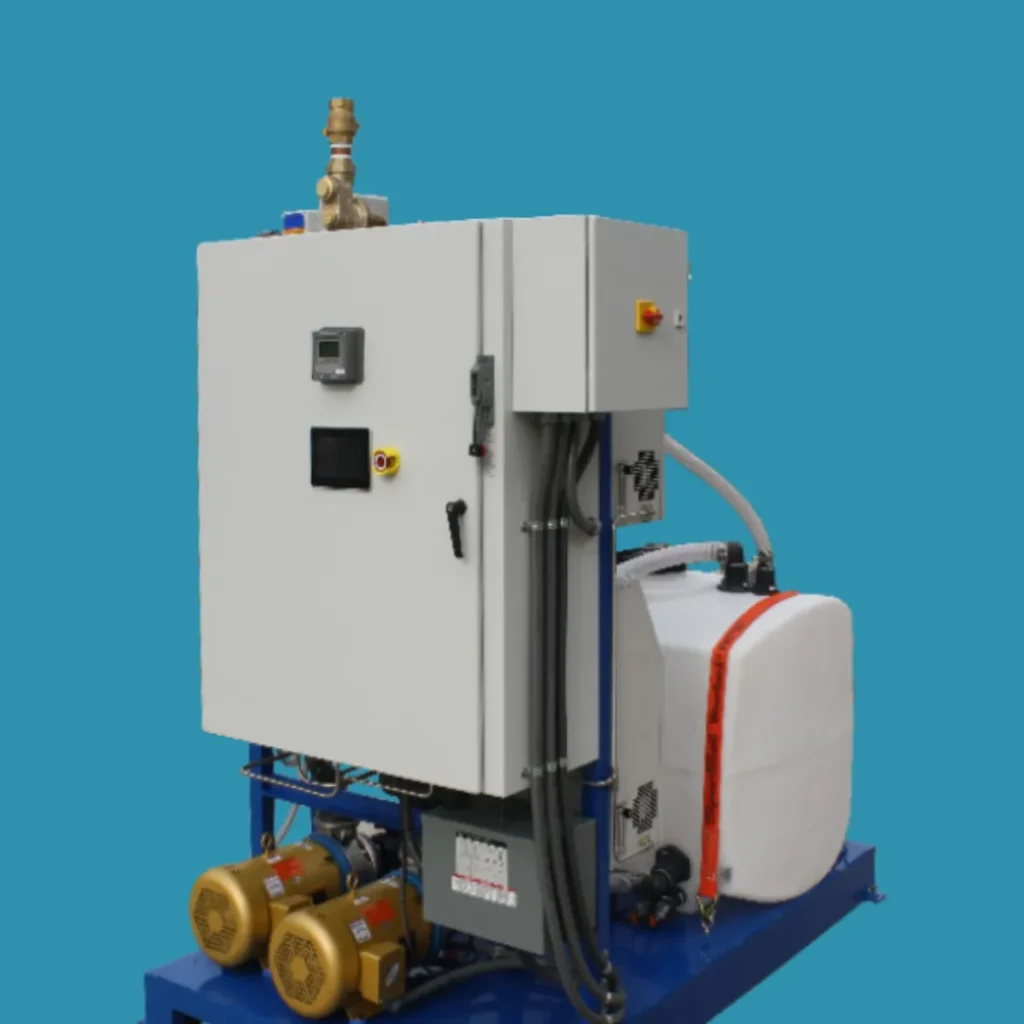
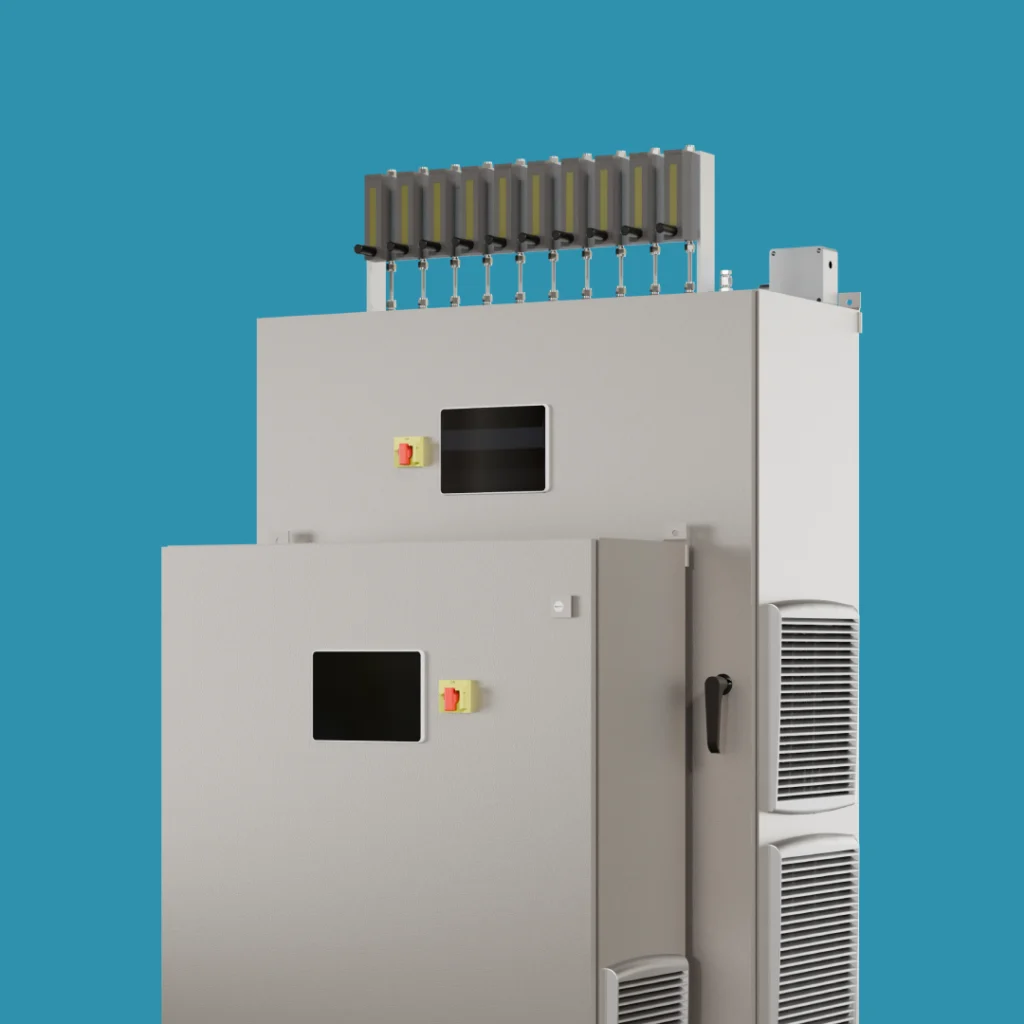
Vapor-phase oxidation systems, such as those developed by GOVAPEX, are highly effective for many wastewater odor control applications. They offer low operating cost, minimal maintenance, and strong performance in decentralized systems.
However, like any technology, VAPEX is not the right solution for every application.
For engineers and operators, selecting the wrong technology can lead to underperformance, unnecessary cost, and operational challenges. Understanding where VAPEX does not fit is just as important as knowing where it excels.
This article outlines the key scenarios where alternative technologies may be more appropriate.
Very High Airflow, Centralized Treatment Systems
Typical Conditions
- Airflows greater than ~5,000–10,000 CFM
- Centralized odor collection systems
- Large headworks or full-plant ventilation systems
Why VAPEX Is Not Ideal
VAPEX systems are designed to treat contained airspaces, not large volumes of continuously moving air.
At high airflow rates:
- Oxidant residence time becomes insufficient
- Treatment effectiveness decreases
- System sizing becomes impractical
Better Alternatives
- Chemical scrubbers
- Large carbon adsorption systems
These systems are specifically designed for high-flow, ducted air treatment.
Fully Open or Uncontained Structures
Typical Conditions
- Open basins, Open EQ Tanks, or lagoons
- Uncovered channels
- Structures with no defined airspace
Why VAPEX Is Not Ideal
VAPEX relies on maintaining a controlled airspace where oxidants can interact with odor compounds.
In open environments:
- Oxidants dissipate immediately
- No containment means no effective treatment zone
- Performance becomes unpredictable
Better Approach
- Source control (liquid-phase treatment like IRONOX)
- Covers with ducted odor control systems
- Process modifications
Ultra-Low Odor or Intermittent Issues
Typical Conditions
- Very low H2S concentrations (<1–5 ppm)
- Odor events only during rare conditions
- Sites with no history of complaints
Why VAPEX May Not Be Justified
In these cases:
- Capital investment may not be warranted
- Simpler solutions may meet requirements
Better Alternatives
- Passive carbon systems
- Operational adjustments
- Monitoring before treatment (Liquid Phase at Upstream Station)
Applications Requiring Guaranteed Removal Efficiency in Ducted Systems
Typical Conditions
- Strict regulatory removal requirements
- Enclosed buildings with defined exhaust points
- Guaranteed percent removal specifications
Why VAPEX Is Not Ideal
VAPEX is designed for in-space treatment, not for:
- Measured inlet/outlet removal guarantees
- Controlled ducted air treatment
If a specification requires:
- 99% removal efficiency
- Defined outlet concentrations
Then traditional systems are more appropriate.
Better Alternatives
- Chemical scrubbers
- Engineered carbon systems with redundancy
Applications with Extreme or Continuous Chemical Loading
Typical Conditions
- Constant H₂S > 150–200 ppm
- Industrial off-gas with high contaminant loading
- Continuous high-strength emissions
Why VAPEX May Not Be Optimal
While VAPEX handles variable loading well, extremely high, constant loading:
- May require larger systems
- Can become less cost-effective than alternatives
Better Alternatives
- Multi-stage scrubbers
- Hybrid systems (scrubber + polishing)
Sites Without Defined Power Availability
Typical Conditions
- Remote locations with no electrical infrastructure
• Temporary installations
Why VAPEX Is Not Ideal
VAPEX systems require:
- Continuous power
- Electrical infrastructure
Better Alternatives
- Passive carbon systems
- Temporary chemical dosing
Where VAPEX Excels
To properly frame these limitations, it is important to understand where VAPEX is most effective:
- Lift stations and wet wells
- Force main discharge points
- Decentralized wastewater assets
- Moderate to high variable H2S environments
- Sites where maintenance access is difficult
- Applications where lifecycle cost matters more than capital cost
Engineering Decision Framework
When evaluating whether to use VAPEX, engineers should ask:
- Is the airspace contained?
- Is airflow relatively low or static?
- Is odor loading variable rather than constant extreme?
- Is minimizing maintenance and chemical handling a priority?
If the answer to most of these is yes, VAPEX is likely a strong fit.
If not, alternative technologies should be considered.
Conclusion
No single odor control technology solves every problem. Chemical scrubbers, carbon systems, and vapor-phase oxidation each have defined roles in wastewater treatment.
VAPEX systems from GOVAPEX are designed for targeted, decentralized odor control, where simplicity, reliability, and low operating cost are critical. However, for high-flow, open, or highly regulated applications, other technologies may be more appropriate.
The best outcomes come from matching the technology to the application, not forcing a single solution across all scenarios.