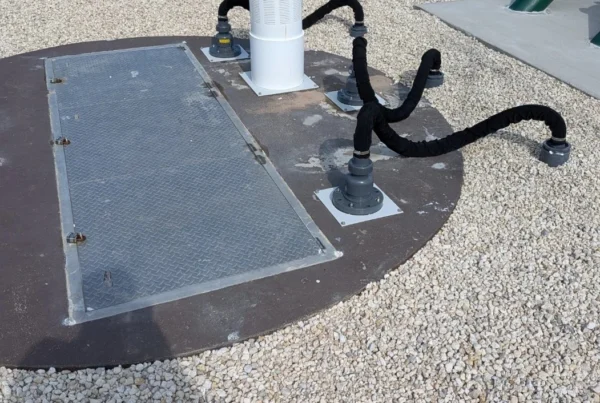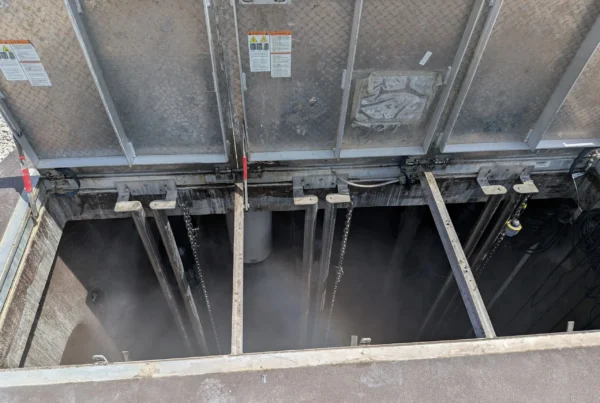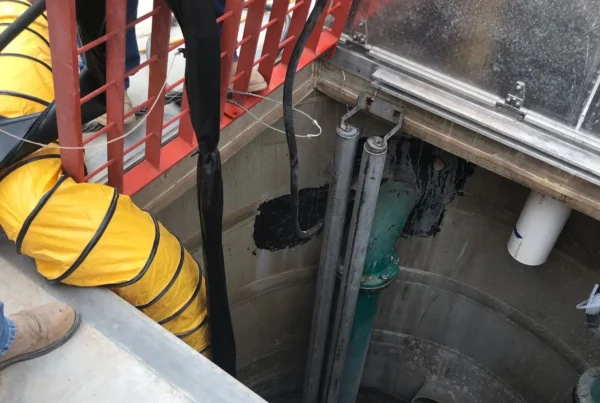

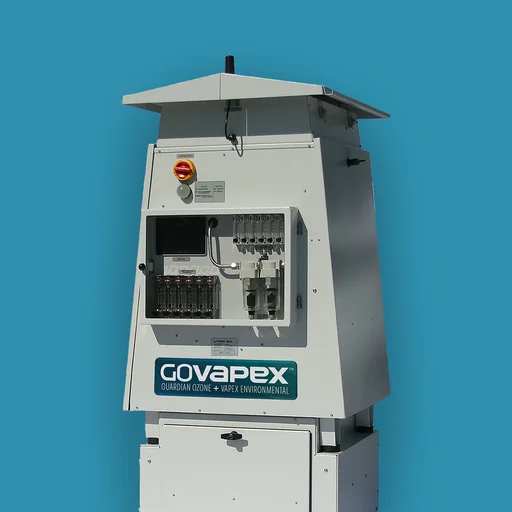
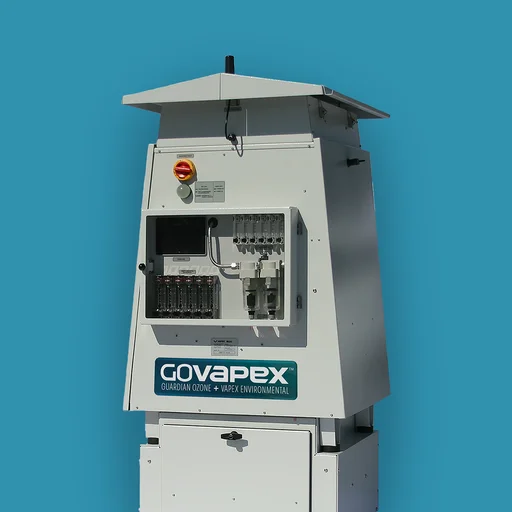
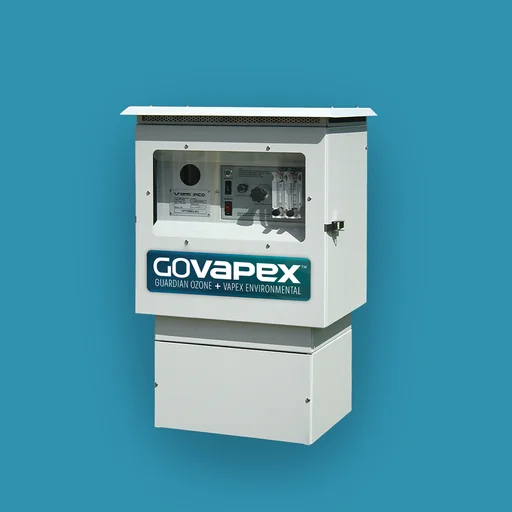
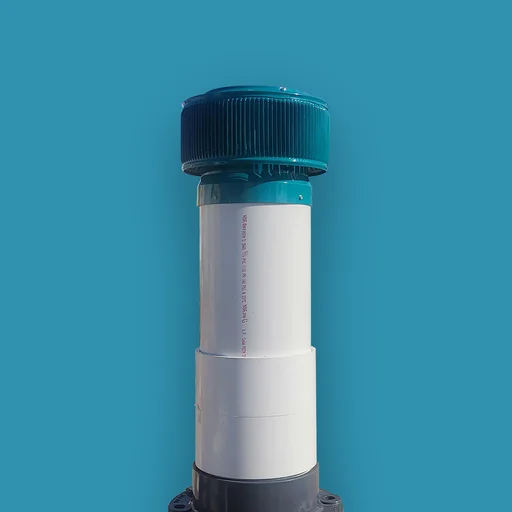
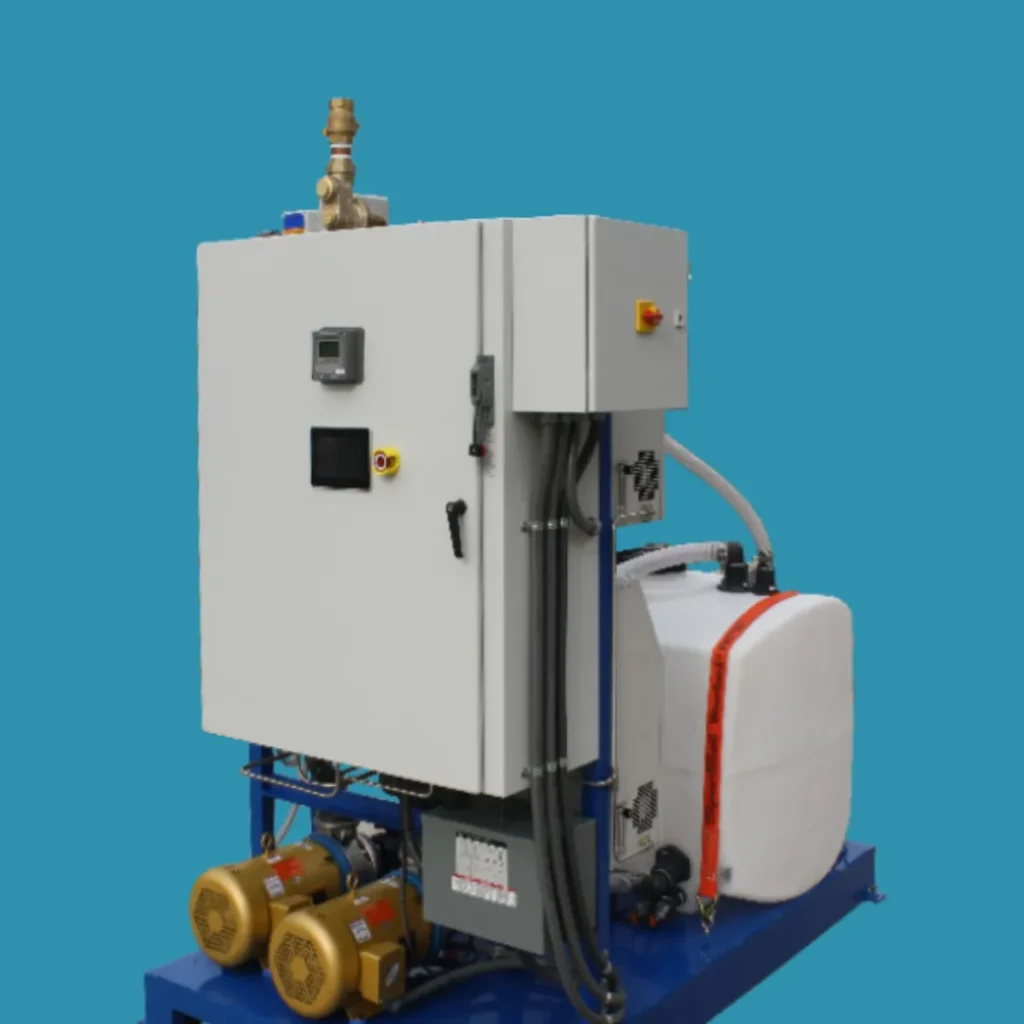
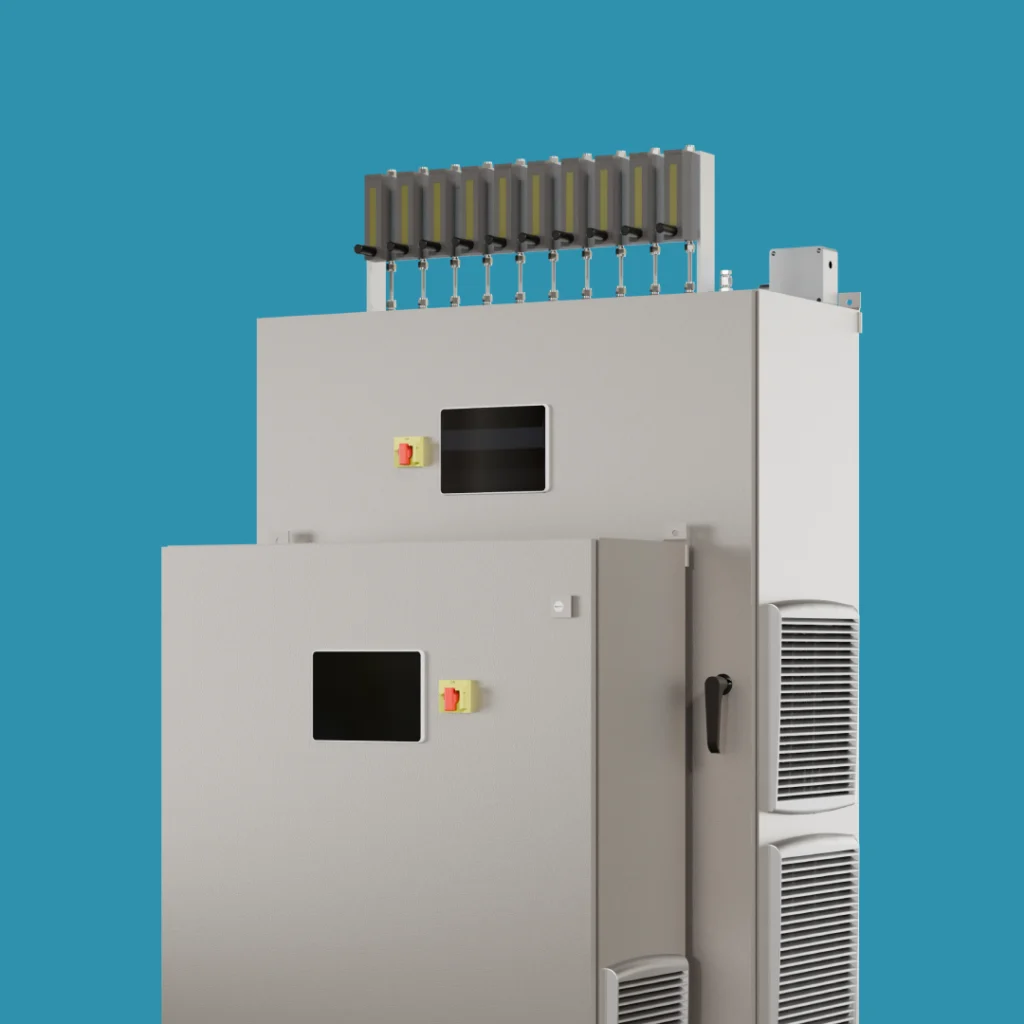

Lift stations are the frontline of odor management in wastewater systems. They combine long detention times, anaerobic conditions, and high organic loading, perfect conditions for hydrogen sulfide formation. GOVAPEX has deployed hundreds of vapor-phase systems across North America, providing valuable field data that demonstrates how advanced oxidation chemistry directly improves system performance and community relations.
The Challenge: Hydrogen Sulfide and Corrosion
Hydrogen sulfide is formed in force mains and wet wells when sulfate-reducing bacteria metabolize organic matter under oxygen-deprived conditions. At concentrations above 5 ppmv, H2S produces a noticeable odor. Above 50 ppmv, it poses health and corrosion hazards. Continuous exposure of concrete and metal surfaces to H2S results in microbial-induced corrosion (MIC), which can shorten infrastructure lifespan by decades.
Traditional odor control measures, carbon filters or chemical scrubbers, require constant maintenance and are limited by media saturation or chemical replenishment. Operators must also handle hazardous materials, adding safety risks and operational complexity.
Field Implementation of GOVAPEX Systems
In 2023, a Florida municipality serving 70,000 residents installed GOVAPEX vapor-phase units at five high-odor lift stations. Pre-installation data indicated average H2S concentrations exceeding 80 ppmv during peak hours, with multiple community odor complaints per week.
The GOVAPEX system used ozone generated on-site from ambient air and atomized it with water to produce a hydroxyl-rich mist. Within 24 hours of commissioning, H2S concentrations dropped below 1 ppmv at all monitored locations. Maintenance logs showed no carbon media replacements, no chemical deliveries, and less than one hour of monthly inspection time per site.
Engineering Performance Metrics
- Odor elimination: ≥98% reduction in H2S at vent stack
- Energy consumption: <1.5 kWh per lb of hydroxyl radical produced
- Footprint: less than 20 sq ft per station
- Maintenance interval: weekly visual inspection only
Key Design Parameters
Proper system sizing depends on headspace volume, gas exchange rate, and H2S loading. GOVAPEX engineers apply mass balance calculations to determine required ozone dose rates (mg O3 per m3 air) and verify through on-site gas sampling. Each system is configured to optimize mist dispersion
Results and Broader Impact
Following installation, the municipality reported a 90% reduction in odor complaints, extended concrete coating life, and measurable improvements in community relations. Operators cited the absence of chemical handling as a major safety improvement.
Conclusion
Field data confirm that vapor-phase oxidation using hydroxyl radicals is not only effective but sustainable. GOVAPEX systems provide continuous odor elimination, protect infrastructure, and improve worker safety, all in a compact, low-maintenance package.
References
- U.S. EPA (2003). Control of Odors and Emissions from Wastewater Treatment Plants, EPA/625/R-03/009.
- Water Environment Federation (2017). Odor Control in Wastewater Treatment Plants, MOP 25.