
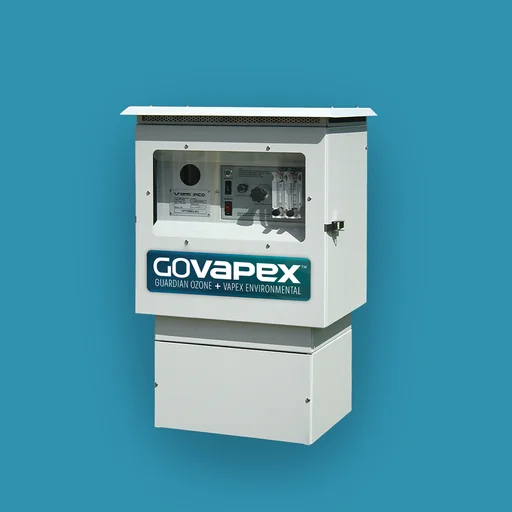
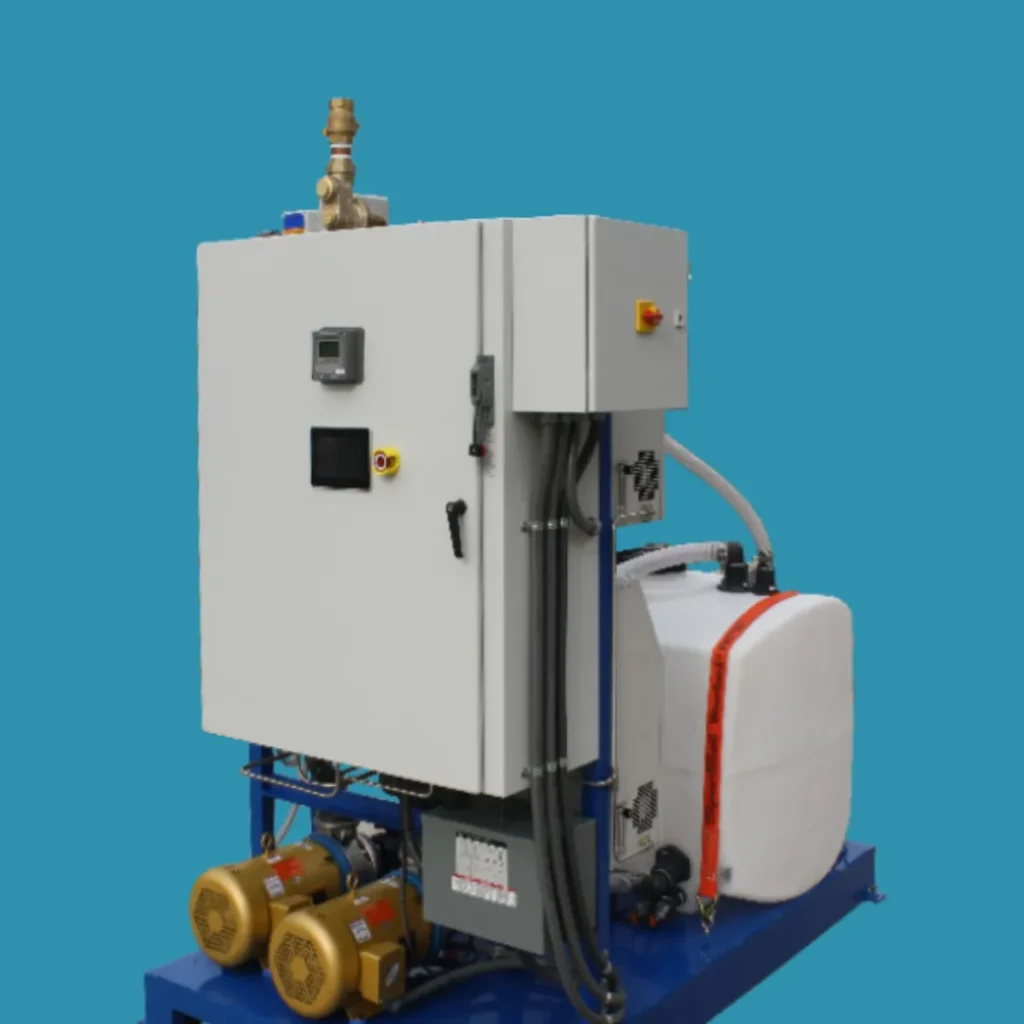
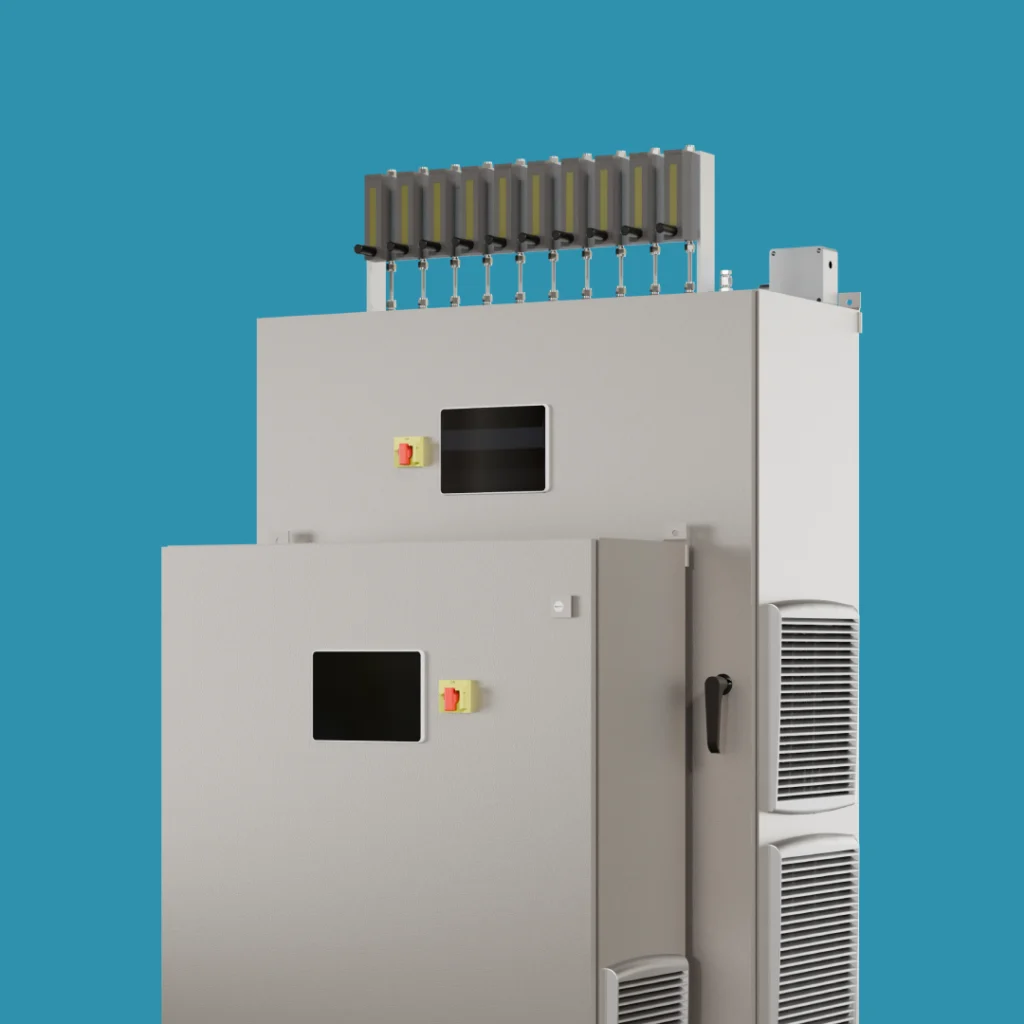

In water treatment, one of the most common engineering missteps is oversizing ozone systems. The result is higher capital cost, reduced efficiency, and operational instability. Data from hundreds of field installations show that most municipal and industrial processes require ozone production within a 20–300 g/hr range. GOVAPEX designed its Sentry and Sentinel series to serve this sweet spot, balancing capacity, cost, and control for optimal oxidation performance.
Understanding Ozone Demand
Ozone demand is driven by flow rate, water chemistry, and treatment objectives. The governing design equation is:
Where:
- C = Required ozone concentration (mg/L)
- Q = Flow rate (L/min)
- E = Transfer efficiency (typically 70–90%)
For small to mid-sized systems (0.1–2 MGD), required ozone production rates typically fall between 50 and 250 g/hr, depending on organic loading and microbial targets. Larger systems rarely achieve higher efficiency proportional to their size due to diminishing transfer performance and energy scaling.
The GOVAPEX Approach
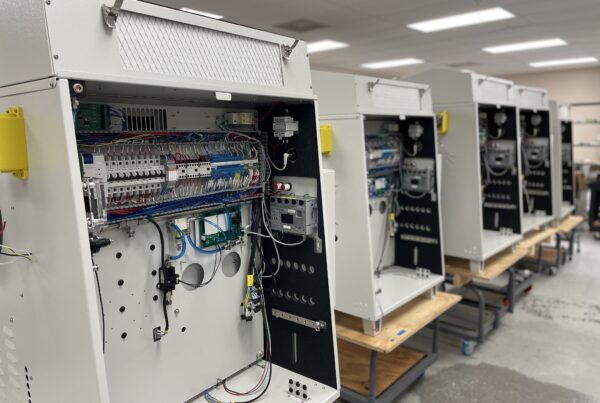
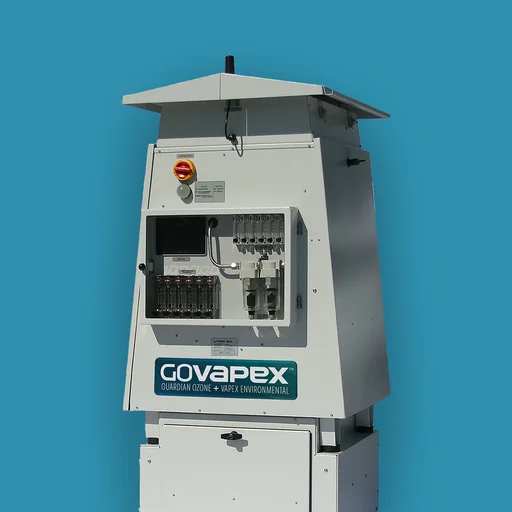
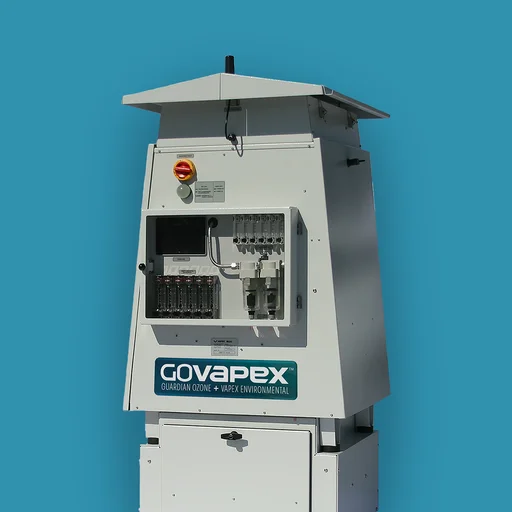
GOVAPEX ozone systems are modular, allowing units to be added or operated in parallel for redundancy. This modularity enables operators to right-size systems for current demand while retaining the flexibility to scale later. Each skid is air-cooled, PLC-controlled, and equipped with automatic power modulation to match ozone output to flow conditions.
Comparative Performance
| Application | Flow (MGD) | Typical Dose (mg/L) | Ozone Required (g/hr) | Recommended GOVAPEX Model |
| Small reuse facility | 0.3 | 2.0 | 75 | Sentry 100 |
| Industrial cooling tower | 0.5 | 1.5 | 120 | Sentinel 150 |
| Tertiary wastewater polishing | 1.0 | 2.5 | 240 | Sentinel 250 |
| Aquaculture RAS | 0.2 | 1.0 | 30 | Sentry 50 |
This range encompasses the majority of real-world applications where ozone provides measurable benefit without unnecessary complexity.
Case Example: Florida Decentralized Reuse System
A Florida utility operating four decentralized reuse plants previously relied on chemical disinfection and periodic carbon scrubbing. Each site handled between 0.2 and 0.8 MGD. In 2024, the utility replaced chemical systems with GOVAPEX Sentinel series ozone skids (rated 140–300 g/hr).
Measured performance data over the first six months:
| Parameter | Pre-GOVAPEX (Chemical) | Post-GOVAPEX (Ozone) |
| Disinfection residual | Variable (Cl₂ residual 0.5–2.0 mg/L) | Stable (ORP 720–750 mV) |
| BOD removal | 15% (secondary) | 35% (ozone-polished) |
| Chemical use | 12 totes/month | 0 |
| Maintenance hours/month | 18 | 2 |
| Annual OPEX | $42,000 | $8,300 |
The systems exceeded disinfection targets while cutting operating cost by 80%. Operators noted improved effluent clarity and no odor during high-temperature months.
Benefits of Right-Sizing
- Improved Process Control – Smaller systems respond faster to flow and quality fluctuations, ensuring consistent disinfection or oxidation.
- Reduced Energy Consumption – Oversized units operate inefficiently at low load; right-sized systems maintain optimal power-to-yield ratios.
- Lower Capital Cost – Each 50 g/hr increment adds measurable savings when properly matched to process demand.
- Scalability – Modular GOVAPEX units can operate in series or parallel for phased system growth.
Energy Efficiency
Field data show GOVAPEX air-cooled generators achieve power consumption between 6.0–6.8 kWh per pound of ozone produced at standard conditions. Oversized systems from other manufacturers often exceed 8.0 kWh/lb O3 due to partial loading inefficiencies.
Maintenance and Reliability
Right-sized systems simplify O&M. Operators perform weekly visual inspections, six-month filter changes, and annual air-dryer service. No chillers or chemical deliveries are needed. Redundant modular setups ensure zero downtime during maintenance cycles.
Future-Proof Design
As reuse and decentralized water treatment continue to expand, flexibility becomes essential. GOVAPEX Sentry and Sentinel systems are built for adaptive deployment, from lift station odor control side-streams to advanced oxidation in small tertiary plants. Each skid includes space and controls for future parallel expansion, minimizing retrofit costs.
Conclusion
Engineering efficiency depends as much on scale as on chemistry. The 20–300 g/hr range represents the most effective operational zone for ozone systems in small and mid-scale applications. GOVAPEX delivers purpose-built equipment for this niche, with compact, efficient, and scalable systems that meet today’s oxidation demands while preparing for tomorrow’s growth.
References
- U.S. EPA (1999). Ozone Disinfection Technical Brief.
- Water Environment Federation (2017). MOP 25.
- Von Gunten, U. (2003). Water Research, 37(7): 1443–1467.