

In wastewater systems, odor problems are often discussed as if they are only a ventilation issue. If a lift station, wet well, or headworks structure smells bad, the first instinct is often to pull air out, send it through a carbon vessel or scrubber, and discharge it somewhere else. While exhaust treatment can be effective in some applications, it does not always address the most important part of the problem: the contaminated airspace inside the structure.
For many decentralized wastewater assets, the headspace itself is where odor, corrosion, and operator exposure problems develop. Hydrogen sulfide does not only become a problem when it leaves the vent. It becomes a problem as soon as it accumulates above the wastewater, contacts moist surfaces, and begins reacting inside the structure.
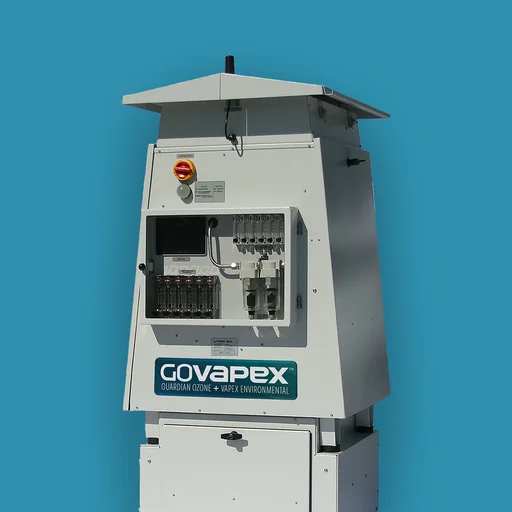
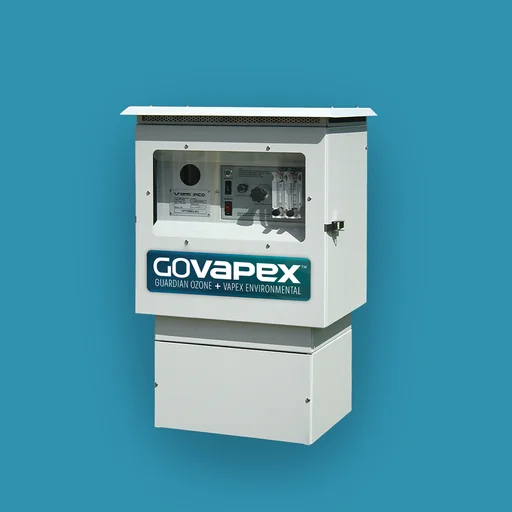
This is why airspace treatment is an important design concept for modern wastewater odor control. Systems such as VAPEX from GOVAPEX are designed to treat the airspace directly, reducing hydrogen sulfide and odor compounds where they form and where they cause damage.
The Difference Between Exhaust Treatment and Airspace Treatment
Traditional odor control systems often focus on treating exhaust air. In this approach, foul air is collected from a structure, moved through ductwork, treated by carbon, a chemical scrubber, or another treatment device, and then discharged.
This approach works well when:
- Airflow is well defined
- The structure is fully enclosed
- Ventilation is controlled
- The goal is to treat a known exhaust stream
However, not every wastewater odor problem behaves this way.
Many lift stations, wet wells, splitter boxes, and force main discharge structures do not have continuous engineered ventilation. Air movement may be passive, intermittent, or affected by pump cycling and hatch position. In these cases, odor compounds can accumulate inside the structure long before they reach an exhaust point.
Airspace treatment takes a different approach. Instead of waiting for contaminated air to leave the structure, the system treats the internal environment directly.
Why the Headspace Is So Important
The headspace in a wastewater structure is not just empty air. It is a reactive chemical environment.
Inside the headspace, hydrogen sulfide, volatile organic compounds, mercaptans, ammonia, and other reduced compounds can accumulate. High humidity creates a thin moisture film on concrete, steel, coatings, and mechanical components. This moisture layer allows chemical and biological reactions to occur on surfaces.
For hydrogen sulfide, the sequence is well known:
- Dissolved sulfide is released from the wastewater as H₂S gas.
- H₂S accumulates in the airspace.
- Moist surfaces absorb H₂S.
- Sulfur-oxidizing bacteria convert H₂S into sulfuric acid.
- Sulfuric acid attacks concrete, steel, and protective coatings.
This means the headspace is not only where odor exists, it is where corrosion begins.
Why Exhaust Treatment Alone May Not Protect Infrastructure
A carbon vessel or scrubber installed on a vent line may reduce odor discharged to the surrounding area. However, if H₂S remains inside the structure before it reaches the vent, corrosion can continue.
This distinction matters.
A utility may install exhaust treatment and see fewer odor complaints while still experiencing deterioration inside the wet well. The community impact improves, but the infrastructure risk remains. Over time, coatings fail, concrete softens, metal components corrode, and rehabilitation costs increase.
For assets where corrosion protection is a major objective, engineers must ask:
Are we treating the air leaving the structure, or are we treating the air inside the structure?
How VAPEX Treats the Airspace
VAPEX systems are designed to introduce vapor-phase oxidants into the odor space. The system creates an oxidizing mist that disperses through the headspace and reacts with hydrogen sulfide and other odor-causing compounds.
This approach provides three important benefits:
- Odor compounds are treated before they leave the structure
- H₂S concentration inside the airspace is reduced
- Corrosion potential on internal surfaces is lowered
Because the treatment occurs in the airspace, VAPEX is well suited for contained environments such as lift stations, wet wells, headworks compartments, splitter boxes, and force main discharge structures.
Application Example: Wet Well With Passive Venting
Consider a lift station with a passive vent and no forced ventilation. H₂S forms during low-flow periods and accumulates overnight. When the pumps cycle or the hatch is opened, the concentrated gas is released, creating odor complaints and operator exposure concerns.
An exhaust-only system may treat some of the vented air, but it cannot fully control the internal buildup unless airflow is consistent and captured.
An airspace treatment system addresses the problem differently. By continuously treating the wet well headspace, H₂S concentration remains lower throughout the day. When the hatch is opened or air is displaced, less odor is released because the air inside the structure has already been treated.
Engineering Considerations for Airspace Treatment
Airspace treatment requires proper application design. The system must be matched to the geometry and behavior of the structure.
Key design factors include:
- Airspace volume
- H₂S concentration and variability
- Liquid level fluctuation
- Hatch and vent locations
- Internal obstructions
- Pump cycle behavior
- Access for nozzle inspection and maintenance
Nozzle placement is especially important. The oxidizing mist must reach the areas where H₂S accumulates and where corrosion risk is highest. Poor placement can leave untreated zones and reduce system effectiveness.
Where Airspace Treatment Works Best
Airspace treatment is strongest in applications where the odor source is contained and airflow is limited or variable.
Common applications include:
- Lift stations
- Wet wells
- Force main discharge structures
- Splitter boxes
- Headworks compartments
- Sludge holding tanks
- Enclosed channels or covered process areas
These environments give the oxidants enough residence time to react before escaping.
Where Airspace Treatment May Not Be the Best Fit
Airspace treatment is not the right solution for every odor problem.
It may not be ideal for:
- Large open basins
- Fully uncontained outdoor areas
- Very high airflow exhaust systems
- Applications requiring measured inlet/outlet removal guarantees
- Large centralized ventilation systems with continuous ducted airflow
In those cases, technologies such as scrubbers, biological systems, or engineered carbon units may be more appropriate.
The key is matching the treatment method to the air behavior of the site.
Operational Benefits
For operators, airspace treatment can improve day-to-day conditions by reducing odor intensity inside structures. This can make routine inspections, hatch openings, and maintenance activities less disruptive.
Because VAPEX systems do not rely on media changeouts or bulk chemical handling, they can also reduce maintenance burden compared with carbon or scrubber systems.
Operational benefits include:
- Reduced odor complaints
- Lower H₂S exposure during inspections
- Reduced corrosion risk
- Fewer media or chemical handling requirements
- More predictable performance between service visits
Why This Matters for Decentralized Assets
Decentralized wastewater assets often receive less frequent attention than treatment plants. A utility may operate dozens or hundreds of lift stations spread across a service area. These sites may not have staff nearby, engineered ventilation, or room for large odor control systems.
For these assets, airspace treatment can be a practical approach because it treats the problem at the point of generation without requiring large ductwork, chemical tanks, or frequent consumable replacement.
This is where VAPEX provides a strong fit within the GOVAPEX portfolio.
Conclusion
Effective odor control is not only about treating the air that leaves a wastewater structure. In many applications, the more important goal is treating the air inside the structure.
The headspace is where hydrogen sulfide accumulates, where corrosion begins, and where operators are exposed during routine maintenance. Exhaust treatment may reduce odor emissions, but it does not always protect internal infrastructure.
Airspace treatment addresses the problem at the source. By reducing H₂S inside contained wastewater structures, VAPEX systems from GOVAPEX help utilities control odor, reduce corrosion risk, and improve operating conditions.
For engineers and operators evaluating odor control options, the first question should be simple:
Do we need to treat the exhaust, or do we need to treat the airspace?