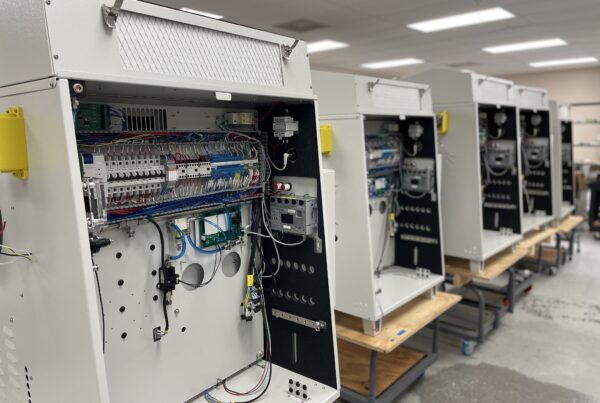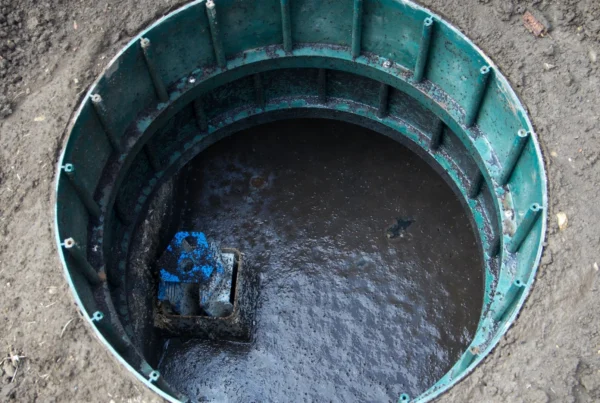

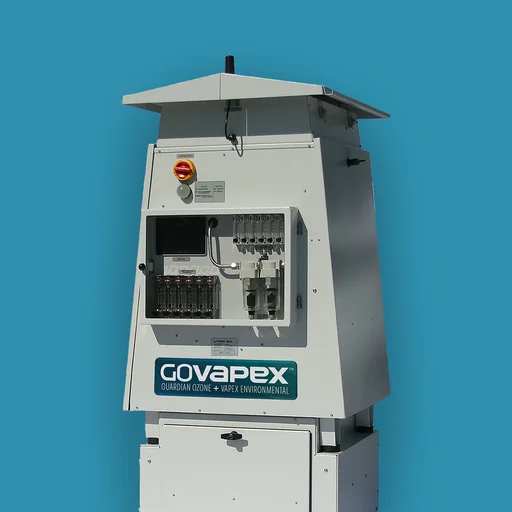
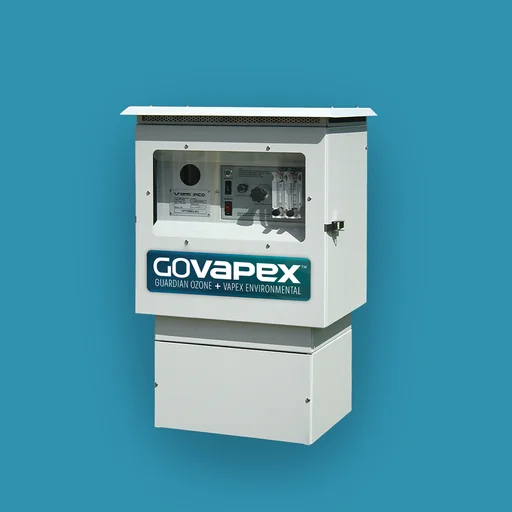
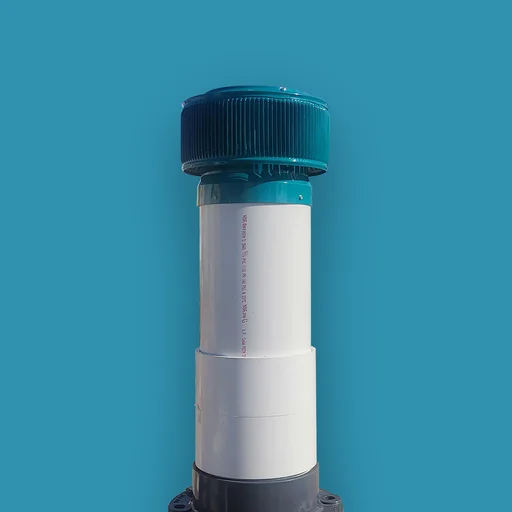
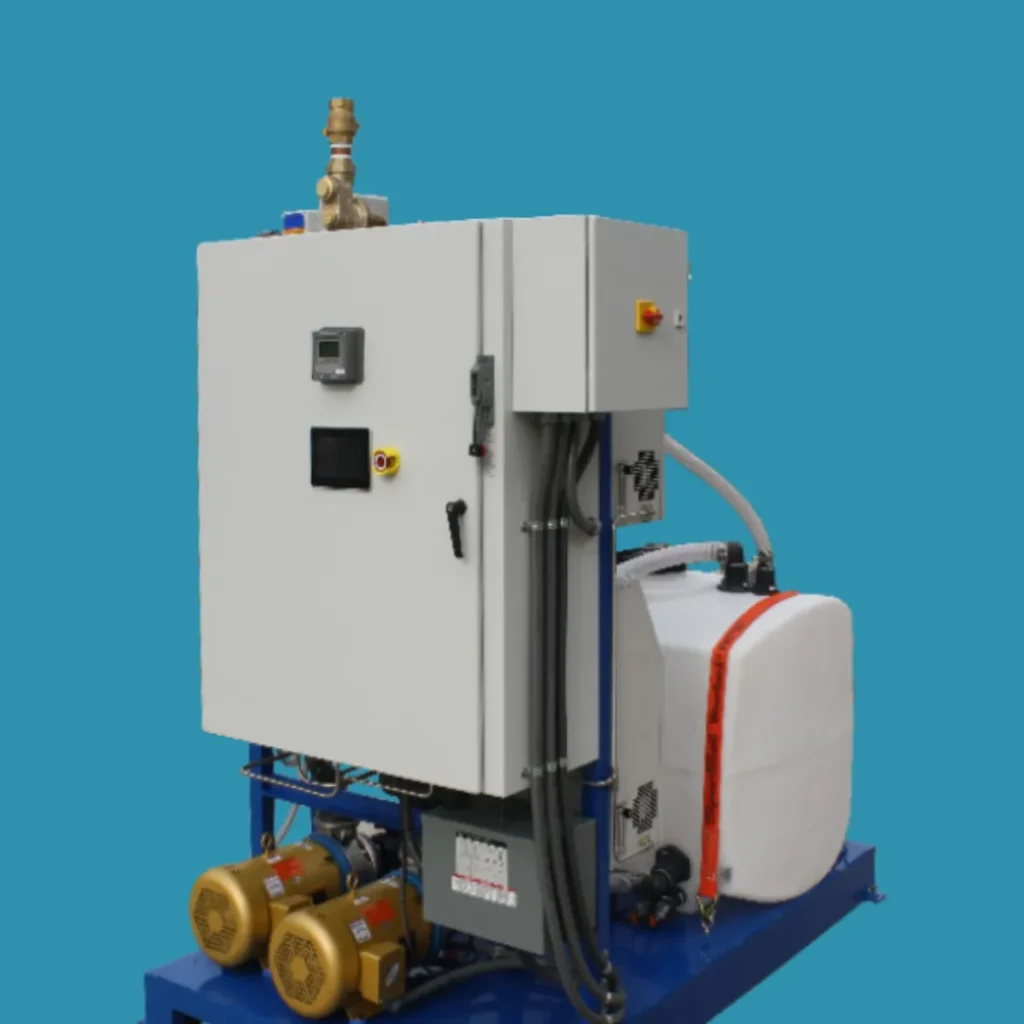
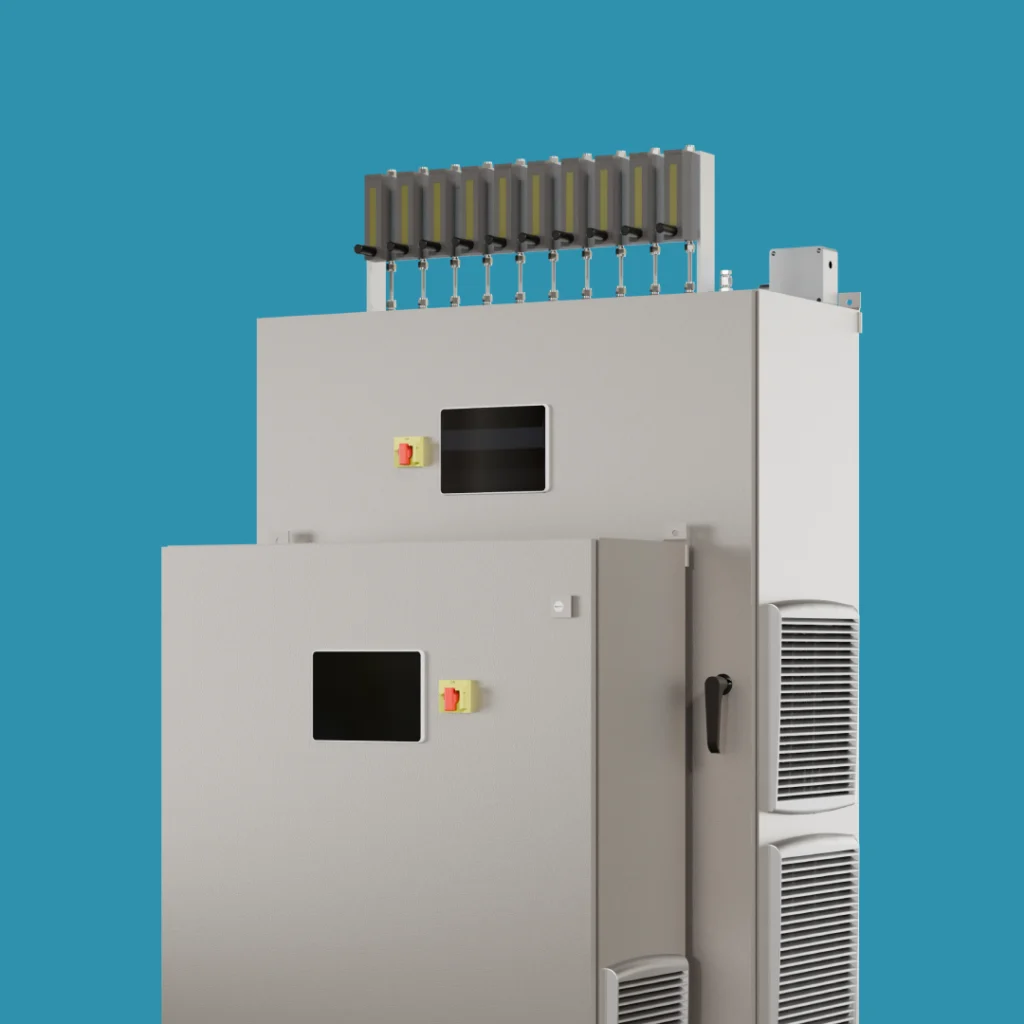

Municipal and industrial odor control has long depended on carbon adsorption or chemical scrubbing. Both technologies are familiar to operators but carry significant costs, maintenance needs, and safety concerns. GOVAPEX introduces a third path: a compact, air- and water-fed vapor-phase oxidation system that permanently eliminates odor compounds while simplifying operations.
Carbon and Chemical Systems: Legacy Technologies
Activated carbon systems rely on adsorption, not destruction. Media effectiveness decreases sharply in humid environments, and high H2S spikes saturate carbon within hours. Replacing spent carbon is labor-intensive and costly, and disposal can involve environmental compliance burdens.
Chemical scrubbers operate by reacting H2S with caustic and oxidizing solutions, often sodium hydroxide and sodium hypochlorite. While efficient under steady loading, these systems require bulk chemical storage, pH and ORP control instrumentation, and regular operator intervention. Chemical handling also introduces worker exposure risks and complex permitting requirements.
The GOVAPEX Advantage
GOVAPEX systems eliminate odors through advanced oxidation, using hydroxyl radicals generated on demand from ozone, ambient air, and water. Because the oxidants are produced in situ, no hazardous materials are stored or transported. The process destroys H2S and VOCs in the air phase, converting them to sulfur, oxygen, water vapor, and carbon dioxide.
The equipment footprint is minimal, often less than one-tenth of an equivalent scrubber installation, and requires only a single power and water connection. Systems are skid-mounted, fully automated, and designed for outdoor installation with minimal site work.
Lifecycle Cost Comparison
A ten-year total cost analysis for a 500-cfm lift station shows the following trends:
| System Type | Average Annual Operating Cost | Major Maintenance | Footprint | Chemical Handling |
| Carbon Adsorber | $35,000–$100,000 | Media replacement 1–2 times/yr | Large | None |
| Chemical Scrubber | $100,000–$150,000 | Pump, tank, sensor maintenance | Large | Yes |
| GOVAPEX Vapor-Phase | $16,000-$30,000 | Nozzle check Monthly | Small | No |
Safety and Regulatory Simplification
Because GOVAPEX uses no chemicals, it typically avoids air permitting and hazardous material reporting. This simplifies compliance with OSHA and EPA chemical management regulations. Operators appreciate the elimination of confined-space media changes and reduced risk of accidental exposure.
Performance in Practice
Field installations demonstrate that GOVAPEX systems consistently maintain sub-1 ppmv H2S levels even under variable loading and humidity conditions. Independent monitoring confirms steady-state performance without breakthrough events typical of carbon systems.
Conclusion
Smaller systems can indeed be smarter. By integrating air-cooled ozone generation, precision atomization, and vapor-phase oxidation in one unit, GOVAPEX delivers lower operating cost, higher safety, and better odor control performance than traditional approaches.
References
- Water Environment Federation (2017). Odor Control in Wastewater Treatment Plants, MOP 25.
- U.S. EPA (2003). Control of Odors and Emissions from Wastewater Treatment Plants, EPA/625/R-03/009.