
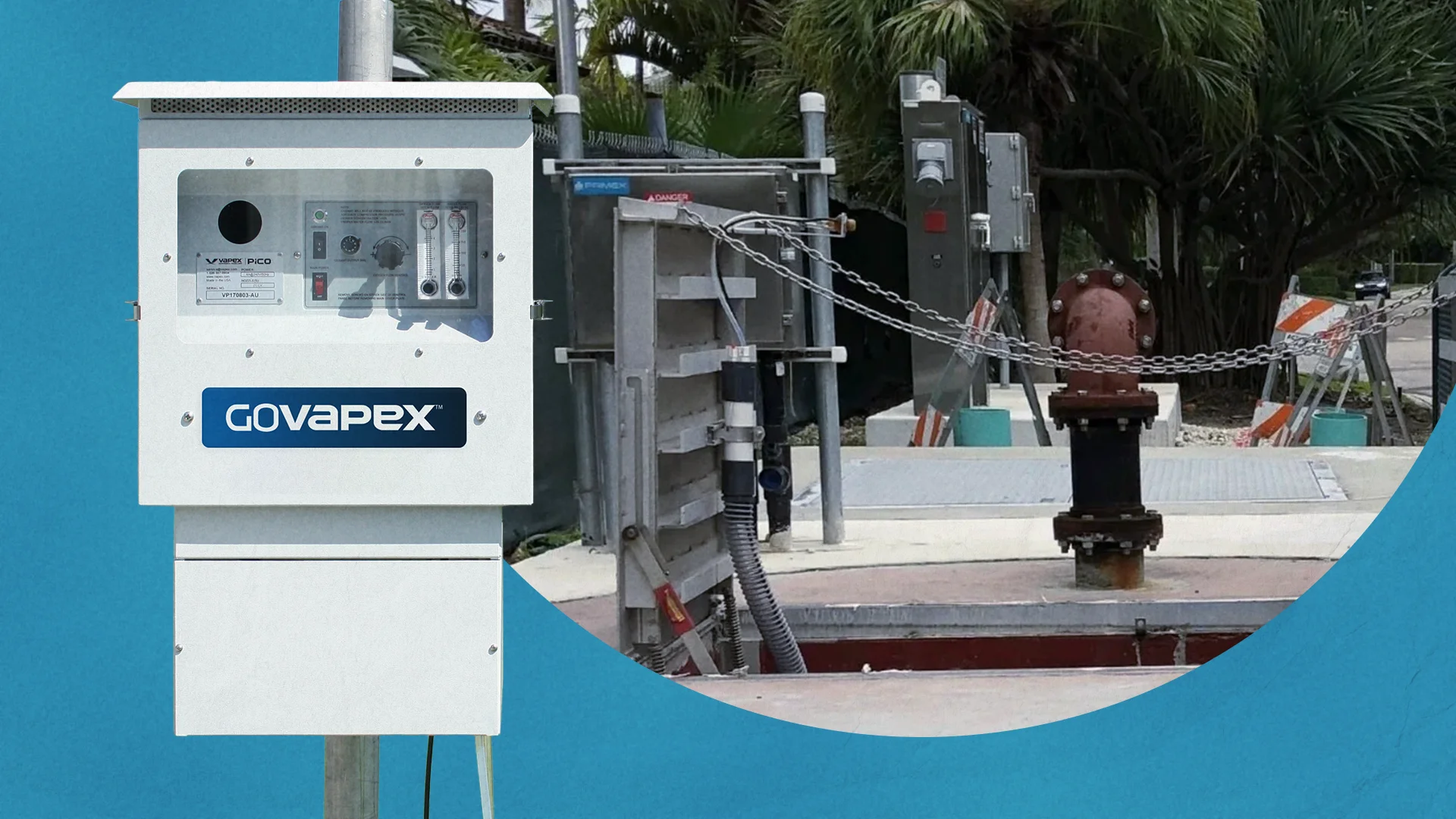
Decentralized odor control presents a unique engineering challenge for municipalities and industrial operators. Unlike large, centralized treatment plants, lift stations and remote wastewater assets operate under limited power, limited space, and limited operator interaction. Odor complaints, hydrogen sulfide (H2S) exposure, and corrosion in these locations are common, and traditional systems, carbon filters, chemical scrubbers, or nitrate feed, are difficult or costly to maintain at small, unmanned sites.
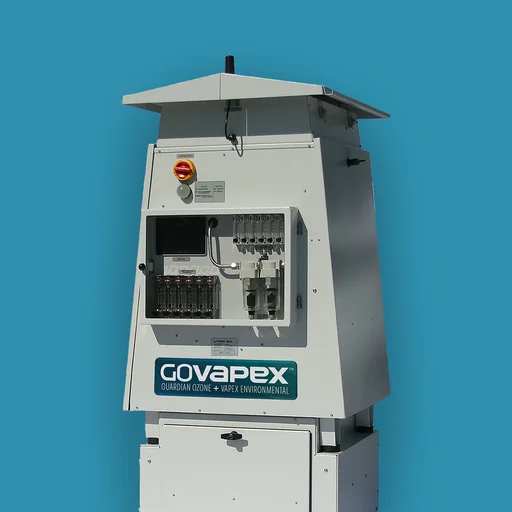
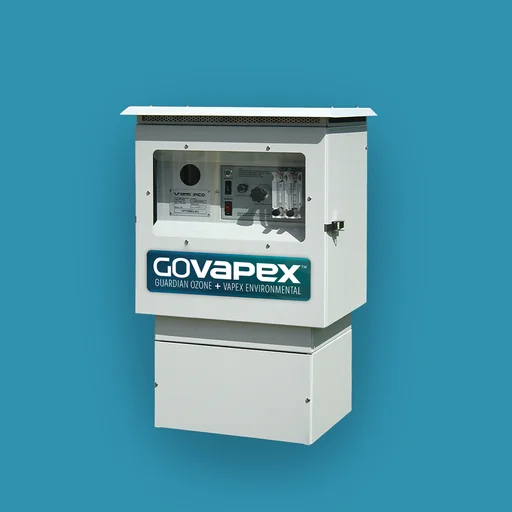
The GOVAPEX PICO system was engineered specifically for these decentralized installations. Drawing on the patented hydroxyl radical fogging method developed by Vapex™, the PICO system applies advanced oxidation chemistry in a compact, fully automated form factor that requires only air, potable water, and 110V power. According to the manufacturer documentation, the PICO generates and applies oxidant using three integrated techniques: oxidant dilution with air, absorption into fine water droplets, and high-volume air dispersion into an enclosed odor space .
This technical blog explores how the PICO system fits into modern decentralized odor control strategies, highlights critical engineering features, and shows why municipalities are increasingly turning to compact radical oxidation technology to manage remote odor hotspots.
The Need for Compact Advanced Oxidation in Decentralized Systems
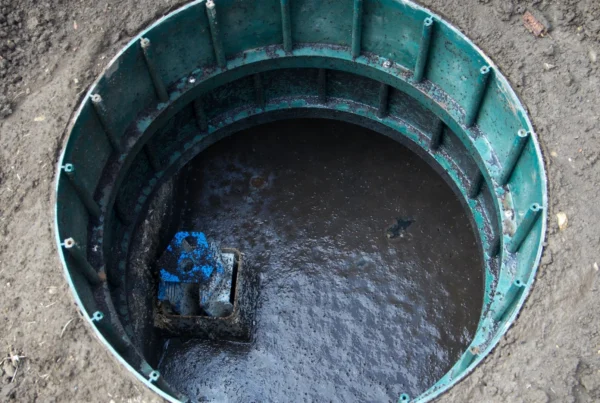
Lift stations experience anaerobic conditions and long detention times, especially where force mains introduce septicity. The resulting hydrogen sulfide gas is not only a nuisance odor but a precursor to microbially induced corrosion (MIC). For many utilities:
- Carbon systems saturate rapidly in high humidity.
- Chemical scrubbers require storage, dosing pumps, and frequent operator visits.
- Nitrate or iron salts require bulk deliveries and introduce significant OPEX.
- Remote sites cannot support large blowers or chemical tanks.
Operators need a treatment technology that is:
- Small enough to fit on an existing pad,
- Robust enough to handle fluctuating H2S loads,
- Safe enough for unmanned sites,
- Effective enough to control both odor and corrosion,
- And simple enough to require minimal operator time.
The PICO system was designed precisely for these constraints.
How the PICO System Applies Radical Oxidation in Remote Odor Spaces
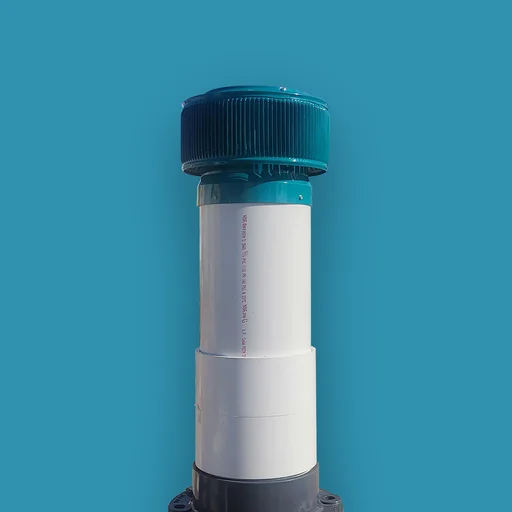
The PICO system produces oxidant (hydroxyl radicals) on-site using purified oxygen and potable water. The oxidant is atomized into the lift station headspace through the LV Nozzle, a precision design that mixes water, air, and oxidant into a high-reactivity fog.
The nozzle combines:
- Four air ports,
- Four water grooves,
- A central oxidant tube
When properly assembled and pressurized (oxygen at ~4 LPM, 7 psi; water at 80–120 cc/min), the nozzle produces a uniform hydroxyl radical fog that chemically destroys H2S, VOCs, and reduced sulfur compounds. Unlike carbon or chemical scrubbers that absorb or mask odorants, hydroxyl radicals oxidize them into harmless byproducts such as sulfate, oxygen, and water.
The vapor-phase application ensures complete mixing throughout the headspace. Because the reaction occurs in the air space above the wastewater, the system simultaneously prevents corrosion by removing H2S before sulfur-oxidizing bacteria can convert it into sulfuric acid.
Compact Design for Remote and Constrained Sites
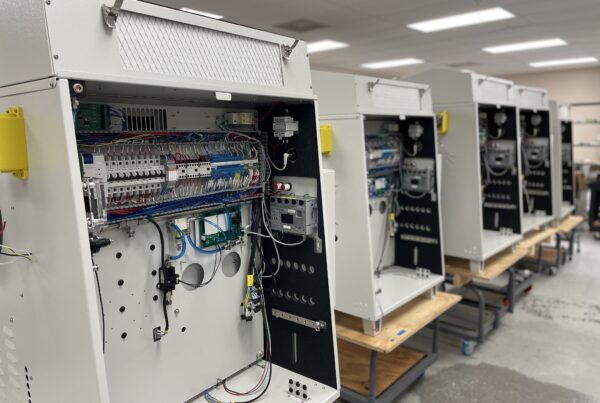
The PICO is engineered as a small modular unit with all process components, including air compressor, oxygen concentrator, oxidant generator, filters, and PLC control, within a single enclosure. The manual illustrates the internal layout, showing the oxygen concentrator, oxidant filter, compressor filter, dryer filter, intake filters, and pre-filter all in a vertically stacked configuration that minimizes footprint.
Key infrastructure requirements:
- Electrical: 110 V, 15 A service
- Water: potable supply
- Tubing: 2″ conduit from unit to nozzle
No chemical tanks, blowers, or additional HVAC or cooling equipment are required.
Because the PICO system uses air-cooled oxidant generation, it avoids the complexity of water-cooled ozone generators, making it well suited for unconditioned environments like lift station pads and underground vaults.
Start-Up and Continuous Operation at Remote Sites
The PICO system is designed for operator simplicity, but the O&M manual emphasizes proper start-up by a certified technician. During initial commissioning, the technician:
- Confirms electrical and water supplies.
- Verifies tubing and nozzle alignment.
- Adjusts oxygen flow and pressure.
- Tunes oxidant output via the oxidant control dial.
As explained in the manual, adjusting only the oxidant control dial affects oxidant output; adjusting oxygen or water flows does not change the oxidation dose.
Once running, the system maintains stable oxidant production, indicated by a green status light. The enclosed PLC logic regulates internal pressures and flows, ensuring consistent oxidant delivery to the nozzle.
Because the PICO continuously treats the airspace, operators note that odor events are eliminated rather than temporarily suppressed. A side benefit is that lift station cleaning frequency often decreases due to oxidation of organic films and partial breakdown of grease layers.
Routine Maintenance Designed for Minimal Operator Time
For decentralized sites, maintenance burden is often the difference between system success and abandonment. The PICO maintenance schedule is intentionally streamlined and consolidated.
Download PICO Operations & Maintenance Manual
Monthly
- LV nozzle inspection and cleaning
- Water flow meter inspection
Nozzle maintenance is simple: cleaning the disk, grooves, and air ports using the proprietary brush and cleaning tool.
Semi-annual
The entire filter set is replaced, including:
- Compressor filter
- Air intake filter and pre-filter
- Dryer filter and bowl
- In-line oxygen filter
- Oxygen concentrator
- Oxidant filter
These replacements can generally be done in under one hour and require only handheld tools. No chemical handling, no confined-space entry, and no media disposal are required.
Safety Features for Unmanned Locations
The PICO system integrates multiple safety layers, aligning with the confined-space protocols municipalities already follow:
- Oxidant is automatically diluted with air and absorbed into fine water droplets before entering the odor space, as documented in the patented process description.
• The system must be shut down before confined-space entry.
• Treated areas must be ventilated for at least 20 minutes before entry to ensure mist dispersion.
• All tubing and fittings utilize industrial push-to-connect components to minimize leak risk.
• The cabinet includes multiple warning labels for ozone safety.
Importantly, the system does not store or inject hazardous chemicals. Oxidant is generated on demand, decomposes naturally, and does not accumulate.
Why Radical Oxidation Is Ideal for Decentralized Odor Control
Radical oxidation eliminates H2S at the point of generation, preventing both odor release and corrosion. In decentralized networks, this has measurable benefits:
- Eliminates Odor Complaints: Continuous airspace oxidation maintains sub-ppm H2S even during peak septicity.
- Reduces Corrosion: H2S is neutralized before biological oxidation can produce sulfuric acid.
- Lowers O&M Costs: No chemicals, no carbon changeouts, no blowers, no wastewater disposal.
- Reduces Operator Exposure: Weekly exterior checks replace chemical handling and confined-space cleaning.
- Fits Any Site: Small footprint, low power, potable water supply, no auxiliary equipment.
Example: Small Lift Station Deployment
A municipality in the Southeast installed a PICO system at a neighborhood lift station with frequent odor complaints. Prior to installation, H2S levels ranged from 30–75 ppmv. After commissioning, continuous monitoring showed concentrations below 0.1 ppmv within 24 hours.
Operators reported:
- Zero odor complaints,
- Reduced pump well cleaning frequency,
- No carbon or chemical deliveries,
- Improved interior concrete surface condition after six months.
This outcome aligns directly with the system’s design: hydroxyl radicals react with airborne H2S, breaking it down into “harmless liquid particles” that return to the waste stream.
Conclusion
Decentralized odor control requires a technology built specifically for remote, constrained, and often unmanned sites. The GOVAPEX PICO system fulfills this role through compact engineering, radical oxidation chemistry, and minimal maintenance requirements.
With air- and water-based oxidant generation, precise LV nozzle fog delivery, simple operator interface, and semiannual consumable replacements, the PICO system provides sustainable, high-performance odor and corrosion control where traditional technologies cannot be deployed effectively.
For municipalities operating dozens, or hundreds, of lift stations or satellite assets, the PICO system offers a practical, reliable, and long-term advanced oxidation solution.[/vc_column_text][/vc_column][/vc_row]