
Odor control systems are often evaluated based on removal efficiency, capital cost, footprint, and operating cost. These are important factors, but one critical design consideration is often underestimated: serviceability.
In wastewater collection and treatment systems, odor control equipment is rarely installed in ideal conditions. Lift stations, wet wells, force main discharge points, splitter boxes, and headworks structures are often exposed to humidity, corrosive gases, limited access, and constrained site layouts. A system that performs well on paper can become a long-term burden if operators cannot easily inspect, clean, maintain, or troubleshoot it.
For municipalities and industrial facilities with limited staffing, serviceability is not a secondary consideration. It directly affects system uptime, lifecycle cost, operator safety, and customer satisfaction. This is why odor control technologies, including VAPEX systems from GOVAPEX, should be evaluated not only by how they treat hydrogen sulfide, but also by how practical they are to maintain over time.
Odor Control Is Not a Set-It-and-Forget-It Decision
Every odor control technology requires some level of maintenance. Activated carbon systems need media replacement. Chemical scrubbers require chemical replenishment, pump maintenance, pH and ORP sensor calibration, and packing inspection. Biological systems require moisture control, nutrient balance, and airflow management. Vapor-phase oxidation systems require routine inspection of nozzles, filters, tubing, and system operation.
The difference is not whether maintenance exists. The difference is whether the required maintenance is realistic for the site and the operator.
A utility may have the budget to purchase a system, but if that system requires frequent service at a remote site, difficult access, confined space work, or specialty chemicals, long-term performance can suffer.
Common Serviceability Problems in Odor Control
Many odor control issues develop gradually. The system may work properly at startup, then decline over months because routine maintenance is difficult or overlooked.
Common serviceability problems include:
- Equipment installed too close to walls or fences
- Carbon vessels with poor access for media replacement
- Chemical tanks located far from safe delivery access
- Scrubber pumps and instruments installed without maintenance clearance
- Nozzle assemblies installed in locations that are difficult to inspect
- Lack of isolation valves or disconnects
- Poor lighting or unsafe access around the installation
- No clear maintenance schedule or owner responsibility
These issues are usually avoidable during design, but expensive to correct after installation.
Why Maintenance Access Matters More at Decentralized Assets
At large treatment plants, operators may pass by odor control systems daily. At decentralized assets, such as lift stations and remote wet wells, visits may occur weekly, monthly, or only when alarms are triggered.
This changes the design priority.
Remote odor control equipment must be:
- Easy to inspect
- Easy to restart
- Easy to troubleshoot
- Resistant to environmental exposure
- Low in consumables
- Practical for one technician to service
If a system requires frequent attention, remote sites become expensive quickly. Truck rolls, emergency visits, and third-party service calls can exceed the original maintenance budget.
For this reason, decentralized odor control should be designed around operator reality, not ideal maintenance conditions.
Comparing Service Burden by Technology
Different odor control approaches create different service profiles.
Activated Carbon
Activated carbon is simple to understand and often lower in initial cost. However, its service burden is tied directly to media life. Once the carbon is exhausted, performance drops quickly.
Service considerations include:
- Media replacement frequency
- Disposal of spent media
- Vessel access
- Breakthrough monitoring
- Odor during changeout
- Labor or contractor cost
Carbon can be effective when loading is low and steady. In high-humidity or variable H₂S environments, media life may be unpredictable.
Chemical Scrubbers
Chemical scrubbers are effective in many large odor control applications, but they are maintenance-intensive.
Service considerations include:
- Chemical deliveries
- Pump maintenance
- pH sensor calibration
- ORP control
- Scale and fouling
- Packing inspection
- Mist eliminator cleaning
- Chemical safety procedures
These systems can be appropriate for large, centralized facilities, but may be difficult to justify at small or remote sites.
VAPEX Vapor-Phase Oxidation
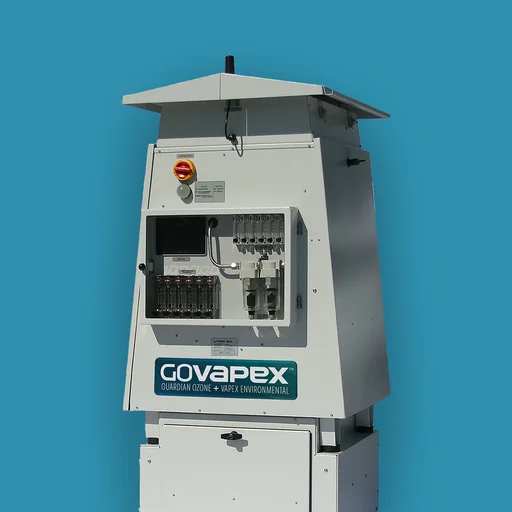
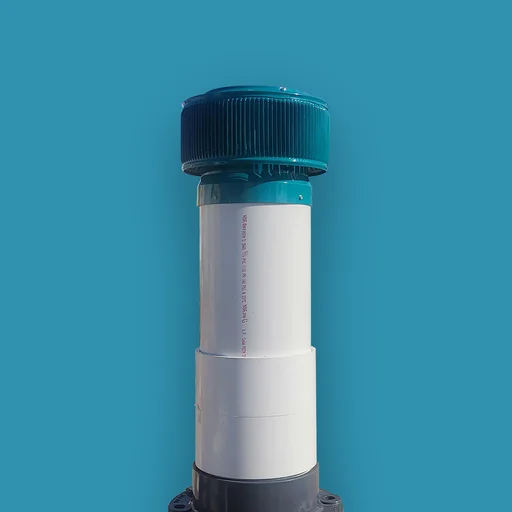
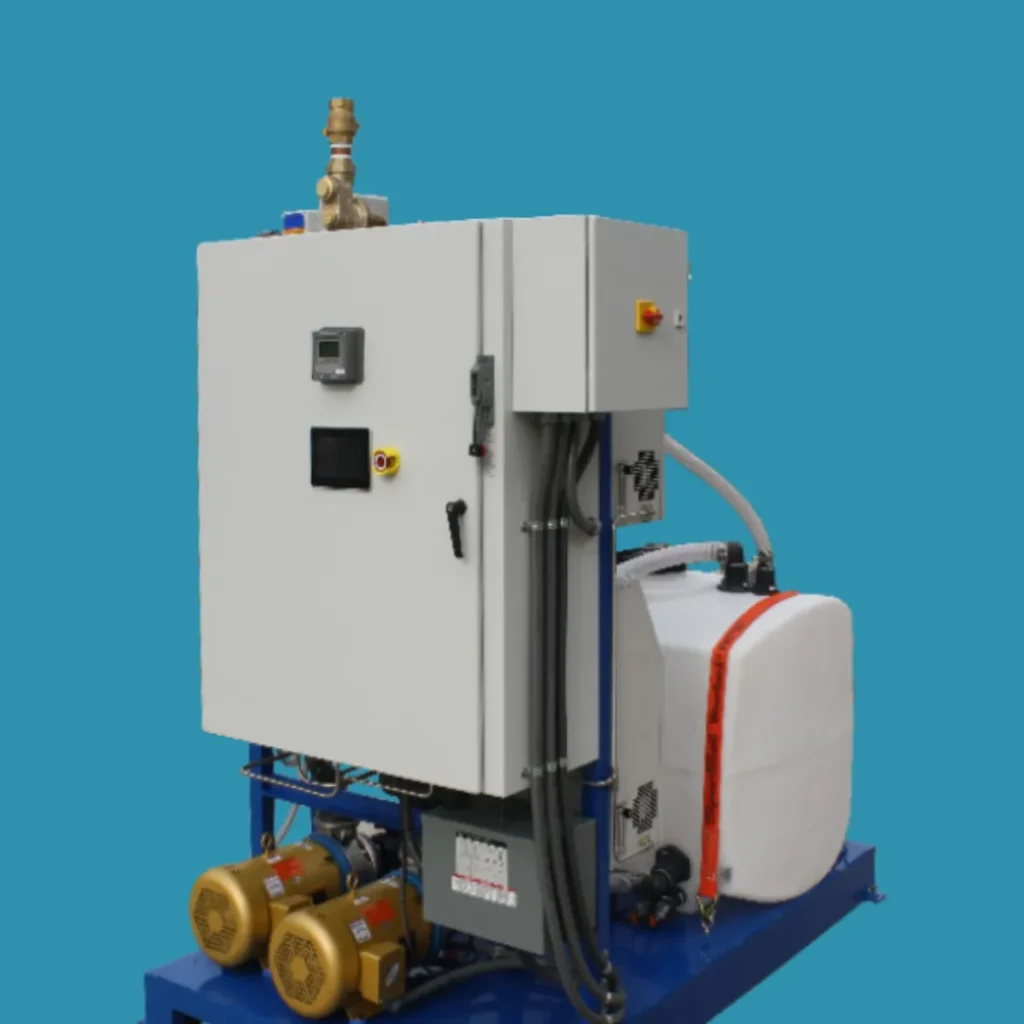
VAPEX systems are designed to reduce the recurring maintenance burden by treating odor directly in the airspace without carbon media or bulk chemical storage.
Service considerations include:
- Nozzle inspection
- Filter replacement
- Visual system checks
- Verification of water, air, and oxidant operation
- Periodic preventative maintenance
The service advantage comes from reducing consumables and simplifying routine operator tasks.
Serviceability Should Be Included in the Specification
Odor control specifications often focus heavily on performance requirements, such as H₂S reduction or outlet concentration. While necessary, these specifications should also include serviceability requirements.
A strong odor control specification should address:
- Minimum maintenance clearance around equipment
- Safe access to all serviceable components
- No confined space entry for routine maintenance where possible
- Clear preventative maintenance schedule
- Local disconnect and lockout provisions
- Weather protection and enclosure ratings
- Spare parts availability
- Operator training requirements
- Startup and commissioning support
Including these items early improves long-term system performance and reduces disputes between owners, engineers, contractors, and vendors.
The Cost of Poor Serviceability
Poor serviceability creates hidden costs. These costs may not appear in the initial capital budget, but they show up over the life of the system.
Examples include:
- Additional labor hours
- Emergency service calls
- Premature component failure
- Missed maintenance intervals
- Odor complaints during downtime
- Higher safety exposure
- Shortened equipment life
A system that is difficult to maintain will eventually be maintained less frequently. In odor control, missed maintenance often leads directly to performance loss.
Field Example: Access-Driven Retrofit
A municipality installed a carbon system at a remote lift station with limited access behind a fence line. The system worked initially, but media replacement required a vacuum truck, temporary access modifications, and multiple operators. Because of the difficulty, media changeouts were delayed. Breakthrough events became common during summer months.
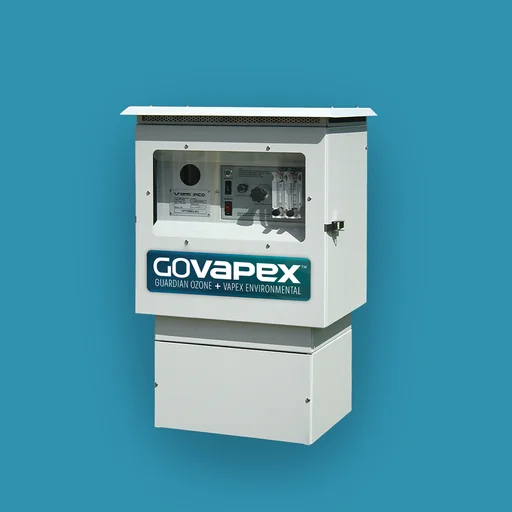
The utility later replaced the system with a compact vapor-phase oxidation unit installed near the control panel with clear access for routine inspection. The result was not only better odor control, but significantly easier maintenance planning. Operators could inspect the system during normal site visits without specialty equipment or contractor scheduling.
The lesson was clear: performance improved because the system matched the maintenance capability of the site.
Designing Around Operator Workflow
Good odor control design should consider how operators actually move through the site.
Questions to ask include:
- Can the operator safely access the system during a normal visit?
- Can filters or components be replaced without special tools?
- Can the system be inspected without opening a wet well?
- Is the system close enough to utilities but away from flood risk?
- Can service be performed by one technician?
- Is there enough space for future replacement or upgrades?
These practical details can determine whether a system remains reliable after the first year.
Serviceability and Customer Retention
For GOVAPEX, serviceability is also a customer relationship issue. Systems that are easier to maintain create better operator experiences. Operators are more likely to trust equipment that is accessible, predictable, and supported.
This matters because repeat business in odor control often depends on field experience. If the first installation is easy to maintain and performs consistently, utilities are more likely to standardize the technology across additional sites.
Serviceability therefore supports:
- Customer satisfaction
- Repeat deployments
- Lower warranty risk
- Better references
- Stronger rep relationships
Conclusion
Odor control performance is not determined at startup alone. It is determined over years of operation, maintenance, and field support.
A properly designed odor control system must be effective, but it must also be serviceable. If operators cannot easily access, inspect, and maintain the equipment, performance will eventually suffer.
For decentralized wastewater assets, serviceability should be treated as a core design requirement. VAPEX systems from GOVAPEX are well suited to these environments because they reduce consumables, simplify maintenance, and support practical long-term operation.
The best odor control system is not only the one that works on day one. It is the one operators can keep working year after year.