
Odor control design in wastewater systems is often more complicated than it appears. Hydrogen sulfide, volatile organic compounds, humidity, airflow, detention time, and infrastructure geometry all influence system performance. When these variables are not properly evaluated, even well-known technologies can underperform.
Many odor control failures are not caused by the technology itself. They are caused by incorrect application, incomplete data, poor sizing, or unrealistic maintenance expectations.
For utilities, engineers, and operators evaluating systems such as activated carbon, chemical scrubbers, biological treatment, IRONOX, or VAPEX vapor-phase oxidation, avoiding common design mistakes can significantly improve performance, reduce lifecycle cost, and prevent repeat odor complaints.
Mistake 1: Designing Around Average H2S Levels
One of the most common errors in odor control design is sizing a system based on average hydrogen sulfide readings.
Wastewater systems rarely operate at steady-state conditions. H₂S concentrations change throughout the day based on flow, temperature, detention time, and upstream loading. A site may average 10 ppm H₂S but experience short-duration spikes of 75 to 150 ppm during low-flow periods, pump cycles, or force main discharge events.
If an odor control system is designed for the average condition, it may perform well during normal operation but fail during peak odor events. These short spikes are often what trigger complaints, corrosion, and safety concerns.
A better approach is to evaluate:
- Average H₂S concentration
- Peak H₂S concentration
- Duration of peak events
- Time of day when peaks occur
- Seasonal variation
- Airspace volume and ventilation behavior
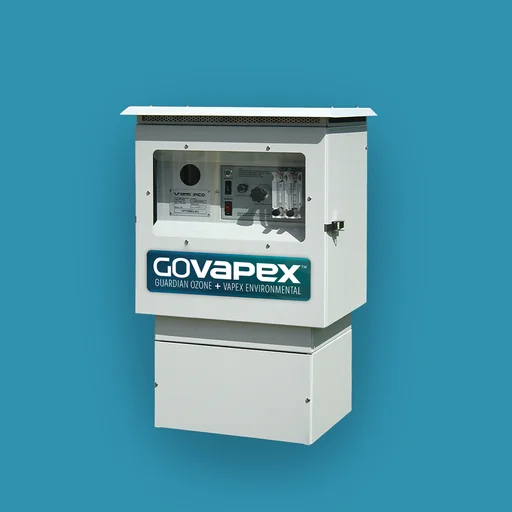
For VAPEX systems, this matters because oxidant output and nozzle placement must be matched to the real odor load, not just a single spot reading.
Mistake 2: Taking One Spot Measurement and Calling It Data
A single H₂S reading is rarely enough to design an odor control system.
Spot measurements are useful for initial screening, but they do not show how the site behaves over time. Operators may take a reading during a daytime visit and measure low H₂S, while the actual odor problem occurs overnight or early in the morning after long detention periods.
Best practice is to collect data over at least 24 to 72 hours using a continuous monitor or data logger. For high-risk sites, longer monitoring periods may be needed to capture weekend flows, industrial discharge cycles, or seasonal impacts.
Good odor control design depends on understanding the pattern, not just the number.
Mistake 3: Ignoring Airspace Geometry
Odor control is not only chemistry. It is also distribution.
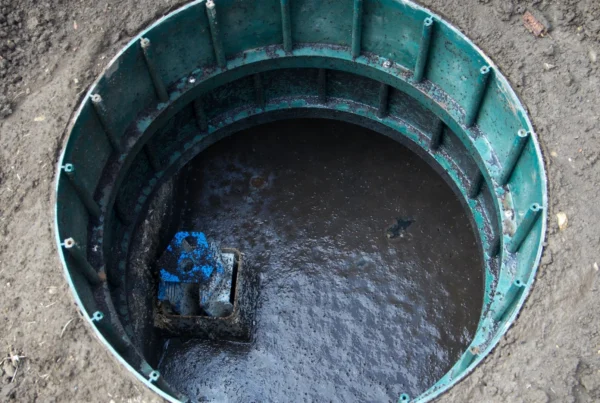
Lift stations, wet wells, headworks structures, splitter boxes, and force main discharge chambers all have different geometries. Dead zones, corners, equipment obstructions, and access hatches can prevent treatment from reaching the full airspace.
A common mistake is assuming that if oxidant, air, or treated vapor is introduced into a structure, it will automatically distribute evenly. In reality, untreated pockets can remain where H₂S accumulates and corrosion continues.
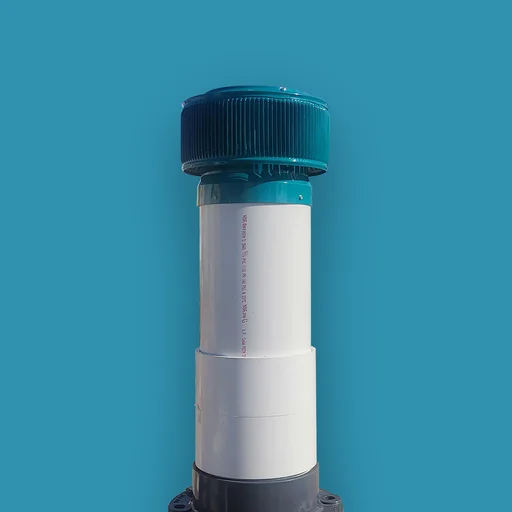
For VAPEX applications, nozzle location is critical. The system must be installed so the hydroxyl radical mist reaches the problem area. Poor nozzle placement can reduce performance even if the system is properly sized.
Designers should evaluate:
- Airspace volume
- Hatch locations
- Vent locations
- Internal walls or baffles
- Turbulence points
- Liquid level variation
- Access for nozzle maintenance
Correct placement can be the difference between consistent odor control and recurring complaints.
Mistake 4: Treating Odor Control as Only an Air Exhaust Problem
Many traditional systems are designed to treat air after it is pulled from a structure. This can work well for large centralized systems with defined exhaust points, but it is not always the best approach for decentralized wastewater assets.
At lift stations and wet wells, the problem often exists inside the airspace itself. H₂S accumulates, contacts moist surfaces, and drives microbial-induced corrosion before it ever reaches a vent.
If the system only treats discharged air, it may reduce odor leaving the site but still allow corrosion inside the structure.
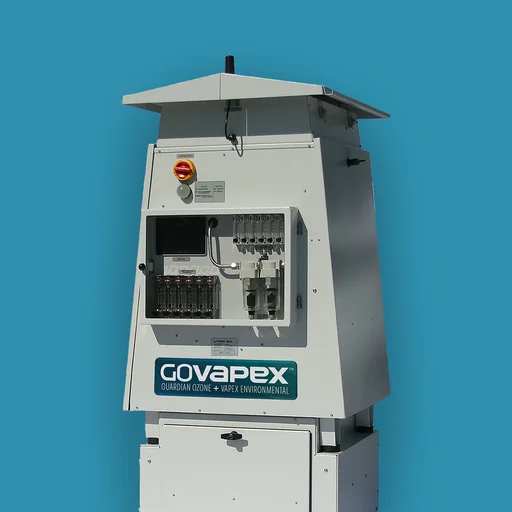
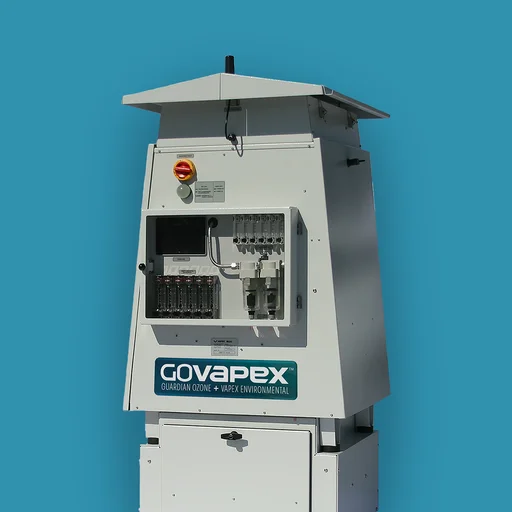
This is where vapor-phase oxidation has an advantage. VAPEX treats the headspace directly, reducing H₂S where it forms and where it damages infrastructure.
The design question should not only be:
“How do we treat the exhaust air?”
It should also be:
“How do we control the airspace inside the structure?”
Mistake 5: Using Carbon Where Loading Is Too Variable
Activated carbon is familiar, simple, and often lower in initial cost. However, carbon systems are frequently misapplied in high-humidity or variable H₂S environments.
Carbon works by adsorption and chemical reaction depending on the media type. Once the media is consumed, breakthrough occurs. In wastewater applications with fluctuating H₂S levels, carbon life can be difficult to predict. A system may perform well for weeks, then fail quickly after a series of high-load events.
Carbon can be appropriate for low, steady odor loads. It becomes less attractive when:
- H₂S levels are high or unpredictable
- Humidity is consistently high
- Media changeouts are frequent
- Access is difficult
- Odor complaints are sensitive
- Lifecycle cost matters more than capital cost
A common design mistake is selecting carbon because it is familiar without calculating realistic media replacement frequency and disposal cost.
Mistake 6: Oversizing Scrubbers for Small or Remote Sites
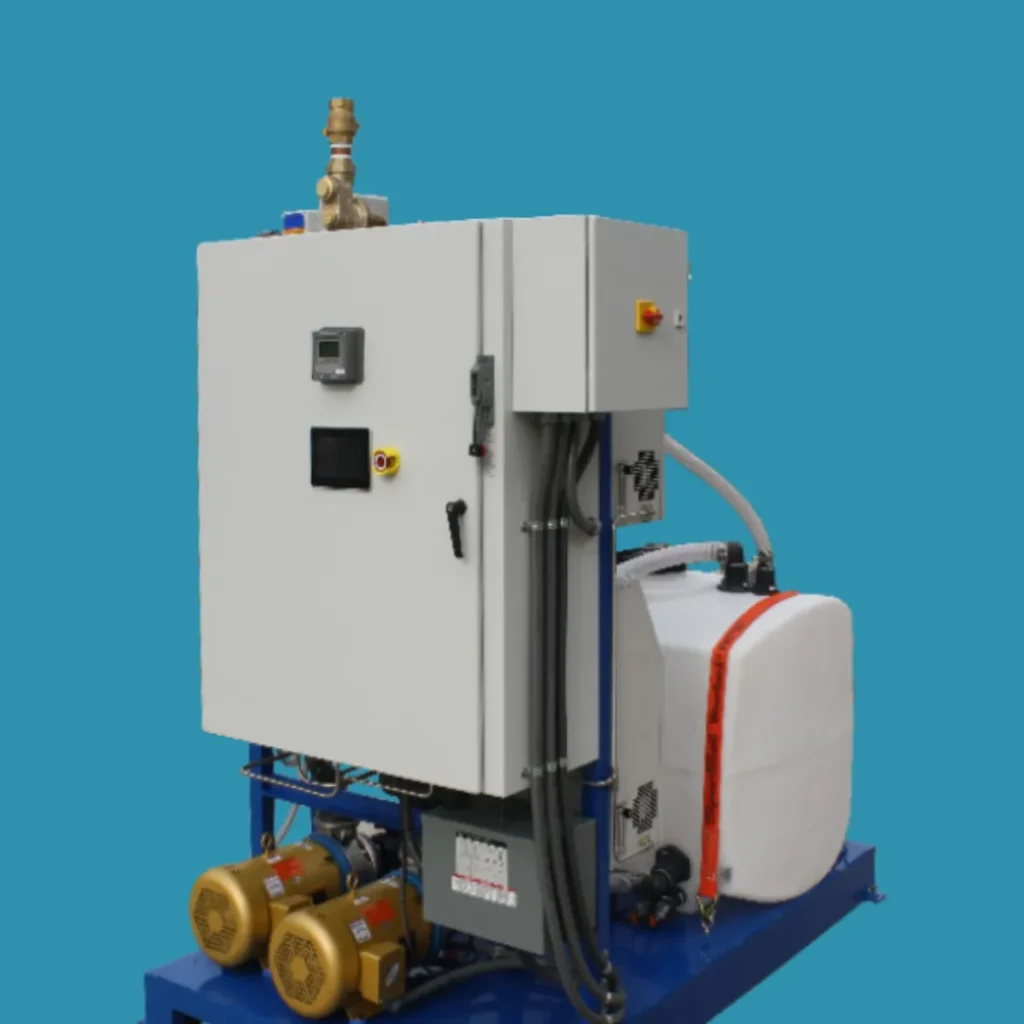
Chemical scrubbers are effective in many large, centralized applications. They can treat high airflow and high contaminant loads when properly maintained.
However, scrubbers are often oversized or overcomplicated for small lift stations, wet wells, and decentralized odor hot spots.
Scrubbers require:
- Chemical storage
- Pumps
- pH and ORP control
- Recirculation systems
- Packing media
- Periodic cleaning
- Operator attention
For remote sites with limited staff, this can create a maintenance burden that outweighs the benefit.
The mistake is not using scrubbers. The mistake is applying scrubber logic to every odor problem. Small and decentralized sites often need compact, low-maintenance systems rather than large chemical treatment packages.
Mistake 7: Ignoring Corrosion When Solving Odor
Odor complaints are visible. Corrosion is often hidden.
Many projects are initiated because nearby residents or staff complain about odor. The selected solution may focus only on reducing smell at the property line. But if H₂S remains inside the structure, corrosion can continue.
Hydrogen sulfide in moist wastewater airspaces can be converted into sulfuric acid by sulfur-oxidizing bacteria. This acid attacks concrete, steel, coatings, rails, fasteners, and electrical components.
A complete odor control design should address:
- Public odor complaints
- Worker exposure
- Internal H₂S concentration
- Corrosion potential
- Asset life extension
For GOVAPEX, this distinction is important. VAPEX is not simply an odor control system. In the right application, it also helps protect infrastructure by reducing gas-phase H₂S before it can form corrosive acid on surfaces.
Mistake 8: Not Considering Maintenance Reality
A design may look good on paper but fail because the maintenance requirements do not match the utility’s staffing reality.
Many utilities are operating with lean crews. Operators may be responsible for dozens of lift stations across a large service area. If an odor control system requires frequent chemical deliveries, media changeouts, calibration, or cleaning, it may not be sustainable.
Before selecting a technology, engineers should ask:
- How often will the system need service?
- Who will perform the maintenance?
- Is confined space entry required?
- Are chemicals or replacement media involved?
- Can the utility realistically maintain the system long term?
- What happens if maintenance is delayed?
Odor control systems should be designed around real operator capacity, not ideal maintenance assumptions.
Mistake 9: Failing to Plan for Seasonal Changes
Hydrogen sulfide generation is strongly affected by temperature. Warmer wastewater accelerates biological activity and increases odor risk. Many utilities see odor complaints increase during summer months, even if the system performs adequately in winter.
A system designed from winter or spring measurements may be undersized during peak summer conditions.
Seasonal design factors include:
- Wastewater temperature
- Biological activity
- Flow variation
- Rainfall and infiltration
- Industrial discharge schedules
- Ventilation changes
For critical sites, odor control sizing should account for worst-case seasonal loading, not only current conditions.
Mistake 10: Treating Every Site the Same
No single odor control technology is best for every application. A large headworks building with high ducted airflow may require a scrubber or biological system. A low-load vent may be suitable for carbon. A lift station with variable H₂S and limited access may be a strong fit for VAPEX. A simple gas-phase vent application may be a good fit for IRONOX media. The mistake is forcing one technology across every site without considering application fit.
A better approach is to build a decision framework based on:
- Site type
- Airspace containment
- H₂S concentration
- Airflow
- Maintenance access
- Capital budget
- Lifecycle cost
- Customer sensitivity
- Corrosion risk
This allows engineers to select the right tool for the specific problem.
Engineering Checklist for Better Odor Control Design
Before selecting an odor control system, utilities and engineers should confirm:
- Has H₂S been monitored over time, not just spot checked?
- Are peak concentrations known?
- Is the airspace contained or open?
- Is the goal odor control, corrosion control, or both?
- Is airflow ducted or static?
- Is the site easy to maintain?
- Are chemicals acceptable at the location?
- Is media replacement practical?
- Is the system being sized for average or worst-case conditions?
- Does the selected technology match the actual application?
Conclusion
Odor control design requires more than choosing a familiar technology. It requires understanding the site, measuring the problem correctly, accounting for transient H₂S behavior, and matching the solution to the operating reality.
The most common failures occur when systems are designed around averages, installed without considering airspace geometry, or selected without evaluating maintenance burden and lifecycle cost.
For many decentralized wastewater assets, VAPEX systems from GOVAPEX provide a strong fit because they treat the airspace directly, minimize operator burden, and reduce both odor and corrosion risk. However, the best outcomes come from proper application, not one-size-fits-all thinking.
Good odor control design begins with one principle: understand the problem before selecting the equipment.