
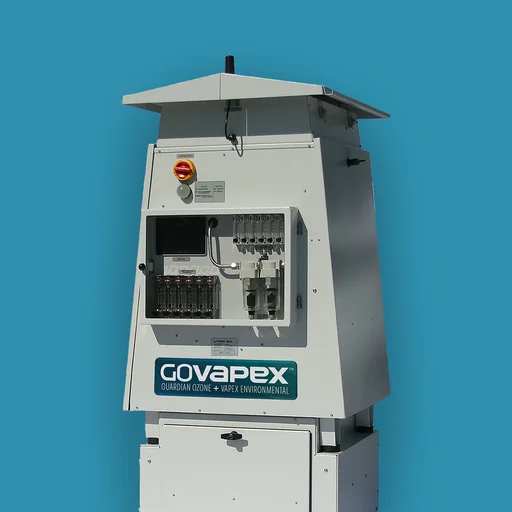
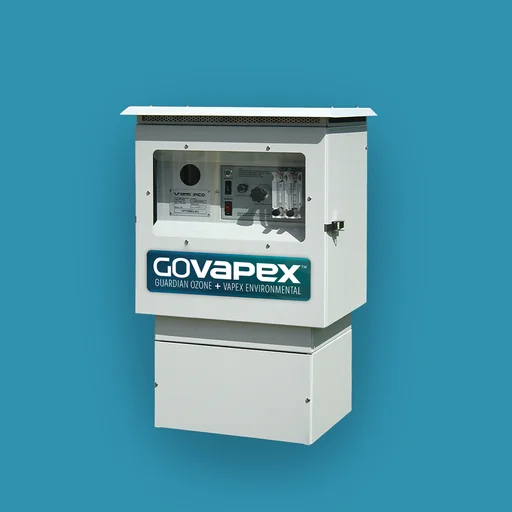
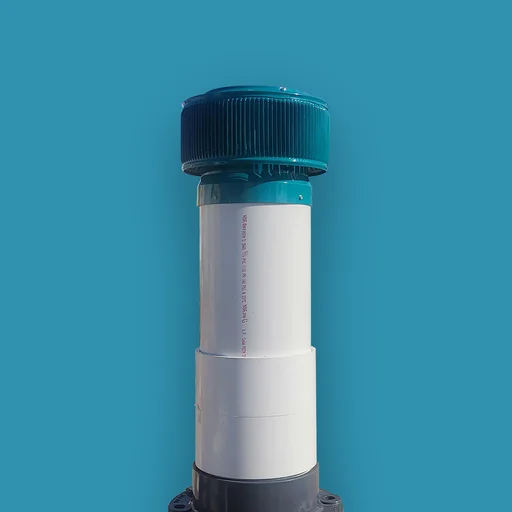
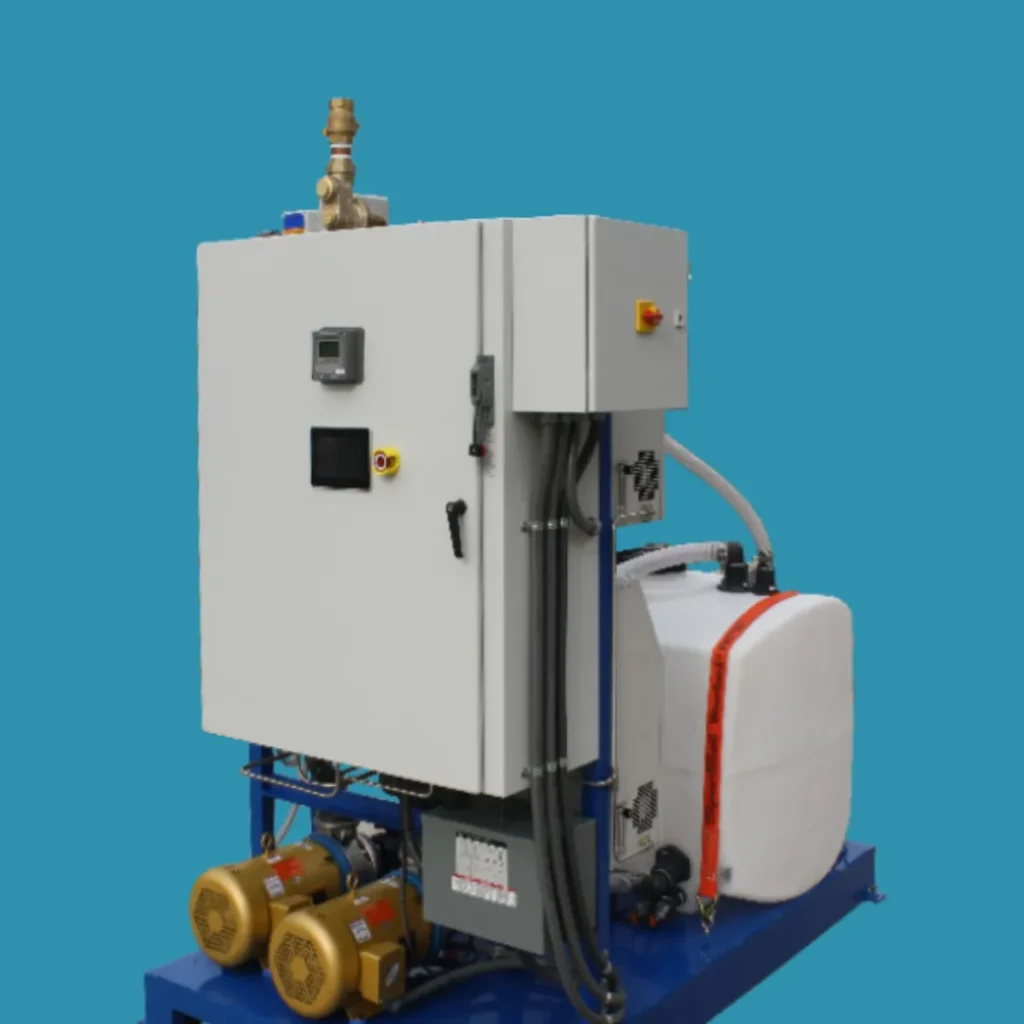
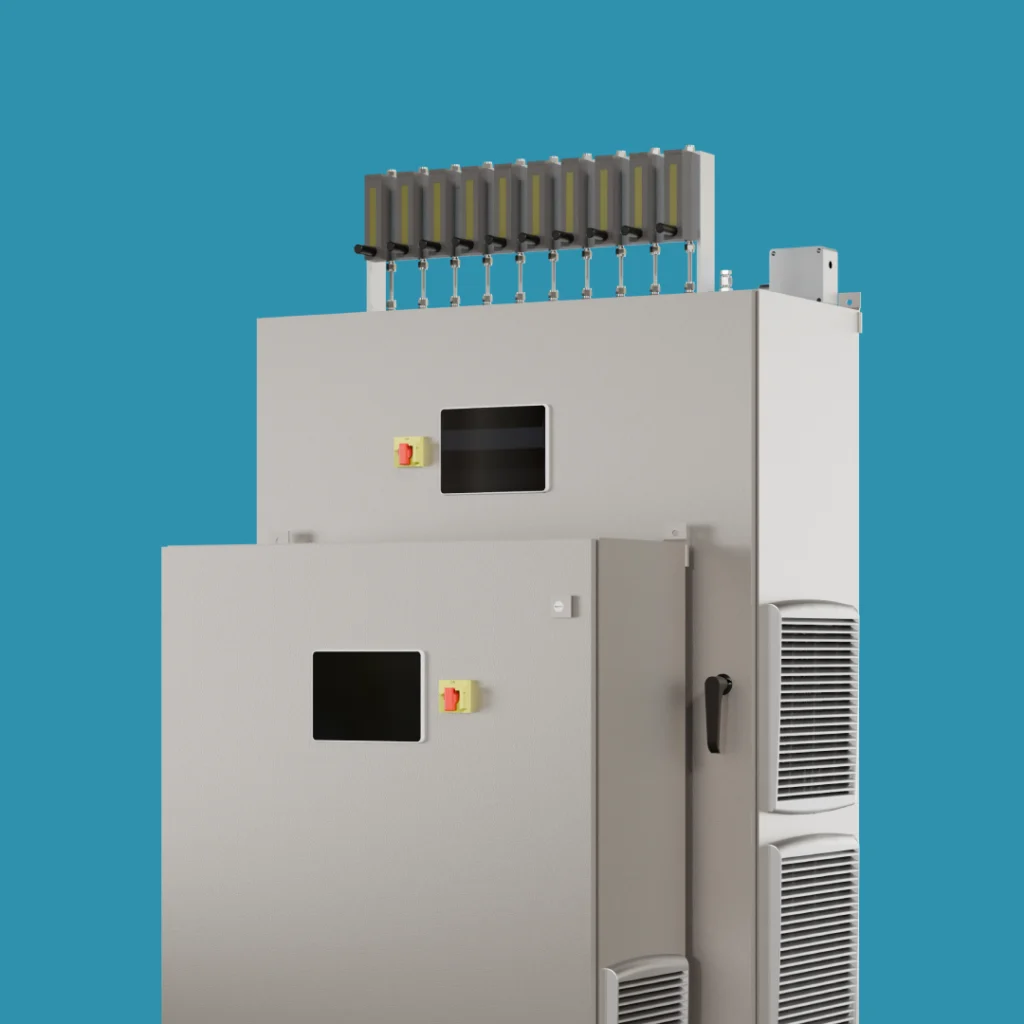

In industrial and municipal water treatment, ozone systems are recognized for their strong disinfection and oxidation capabilities. However, system design choices, particularly the cooling method, have a major influence on reliability and cost. GOVAPEX air-cooled ozone systems provide a simpler, more robust solution for applications requiring 20–300 g/hr of ozone, where water-cooled systems add unnecessary complexity.
Thermal Management in Ozone Generation
Ozone is produced via corona discharge, an electrical process that converts oxygen molecules (O2) into ozone (O3). The process is exothermic, and temperature directly affects ozone yield. Historically, water-cooled generators used external chillers or cooling loops to control temperature, but these systems introduce pumps, valves, and coolant maintenance requirements.
Air-cooled generators use forced convection to remove heat from the discharge chamber and power electronics. For mid-range ozone outputs, this approach maintains stable ozone concentration without the need for secondary water systems.
Reliability, Maintenance, and Energy Use
Every additional subsystem, coolant loops, pumps, filters, add potential failure points. Field data show that water-cooled ozone systems have downtime rates up to 30% higher than air-cooled equivalents due to leaks, scaling, or pump failure. GOVAPEX air-cooled generators eliminate these vulnerabilities. They are fully sealed, corrosion-resistant, and controlled via PLC-based logic that maintains discharge temperature automatically.
Power efficiency is another advantage. Because there is no chiller load, overall energy consumption is reduced by 10–15 percent. In municipal installations where systems run continuously, this translates to measurable OPEX savings.
Field Performance
A southern utility operating a 0.5 MGD reuse plant replaced its legacy water-cooled ozone system with a GOVAPEX air-cooled unit rated at 150 g/hr. Energy use dropped from 7.8 to 6.6 kWh per pound of ozone produced, while maintenance time decreased from 8 hours per month to less than 1 hour.
Simplicity in Integration
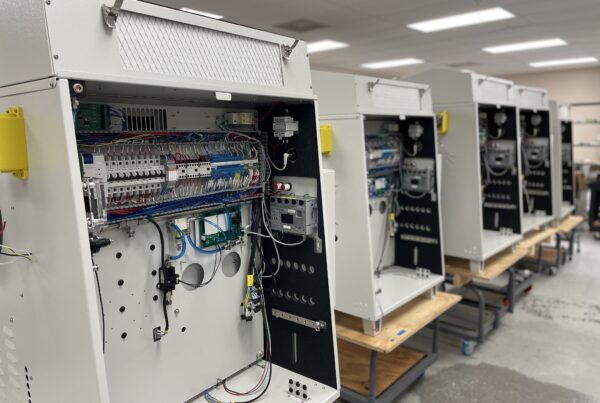
Air-cooled ozone systems integrate easily into packaged skids and containerized systems. GOVAPEX designs include onboard air preparation, feed gas controls, and safety interlocks. This configuration allows engineers to deploy ozone technology without auxiliary infrastructure or complex commissioning procedures.
Conclusion
When ozone demand is moderate, simplicity translates directly to reliability. By removing unnecessary cooling circuits, GOVAPEX air-cooled ozone systems deliver stable performance, reduced downtime, and lower lifecycle cost, qualities that define modern, maintainable process design.
- Rice, R.G. and Netzer, A. (1982). Handbook of Ozone Technology and Applications.
- U.S. EPA (1999). Ozone Applications for Municipal Wastewater Disinfection, EPA 832-F-99-063.
- Von Gunten, U. (2003). “Ozonation of Drinking Water: Part I,” Water Research, 37(7): 1443–1467.